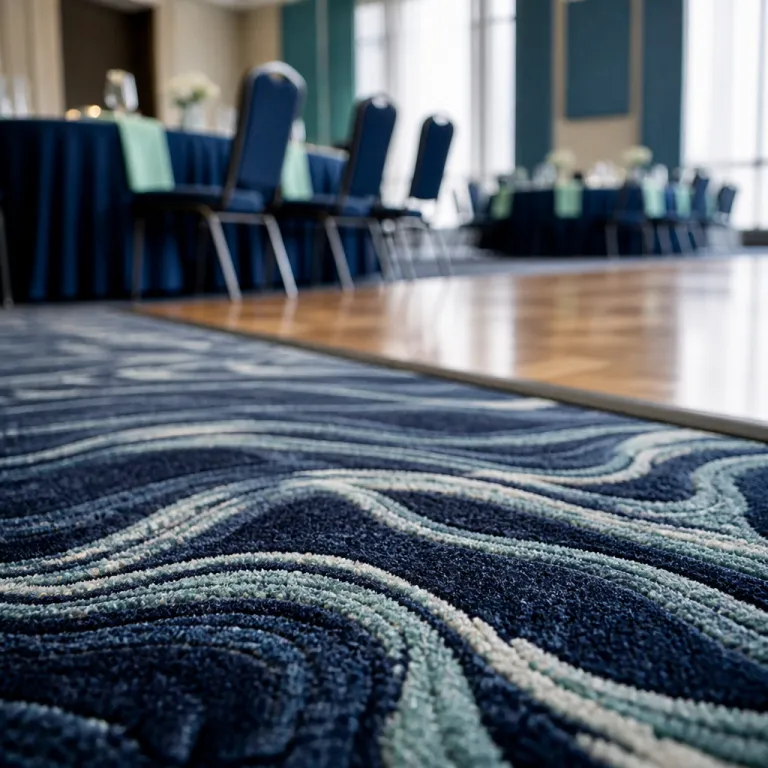
When first hotels event spaces count in an asset strategy
For institutional owners, the moment when first hotels event spaces count most is when underwriting long term cash flows. Asset managers know that the mix of event, meetings, and rooms revenue will shape both volatility and resilience across cycles. A hotel that aligns its event spaces with clear demand segments usually outperforms peers on net operating income.
Event space is no longer a side activity; it is a core driver of asset value. When a hotel can host both intimate private meetings and large corporate events, the asset gains pricing power across seasons. The best teams treat every room, every meeting space, and every square metre of public areas as a flexible revenue platform.
In this context, hotel event capacity becomes a strategic metric, not a marketing boast. Owners should map how many events the hotel can host simultaneously, and how many guests can circulate comfortably between rooms and unique spaces. This operational capacity then feeds directly into sales targets, capital planning, and brand positioning.
From square metres to yield : valuing event spaces like financial assets
Too many transactions still value event spaces as a static line item, while sophisticated investors treat them as yield instruments. When the role of hotel function space is analysed properly, each room is modelled for utilisation, rate, and ancillary spend per guest. The objective is to understand how events convert into total revenue per available square metre over time.
According to publicly available 1 Hotel South Beach meetings and events specifications, the Terra Ballroom can host up to approximately 1,000 guests for a large reception-style event (capacity figures subject to configuration and operator updates). That capacity, combined with adjacent rooms and breakout spaces, allows the hotel to capture high margin corporate events and social events that spill into suites, restaurants, and beach experiences. In a competitive set where non hotel venues are rising, such integrated spaces anchor both group base business and transient premium pricing.
By contrast, public floor plans for the AC Hotel Ann Arbor by First Hospitality indicate a largest meeting room of roughly 330 square feet (estimate based on published diagrams), which pushes the asset towards small meetings, interviews, and private board style sessions. Here, the value of hotel meeting space is driven by frequency of meetings rather than a single unique event with massive guest volume. Asset managers must therefore benchmark event spaces not only against hotels, but also against co working, campus venues, and independent event spaces, as explored in analyses of a modern hotel competitive set.
Programming events to stabilise cash flows and sales cycles
When hotel event inventory is translated into a programming calendar, the asset gains a predictable rhythm of demand. A disciplined sales team will segment events into corporate events, social events, and private celebrations, then align room allocations and pricing corridors. This approach turns event spaces into a stabiliser for midweek occupancy and a catalyst for premium weekend rates.
For example, First & Bell in Seattle lists nearly 9,000 square feet of flexible space across its main hall, mezzanine, and ancillary areas (figures based on venue marketing materials), which can host multiple events or one large event depending on the day. Such unique spaces attract clients who value industrial style, urban access, and the ability to customise the experience for their guests. When a hotel management company like First Hospitality integrates similar spaces into its portfolio, it can build regional sales pipelines that cross sell meetings and rooms across several hotels.
To fully monetise this, asset managers must connect event programming with direct booking strategy and digital demand generation. As AI driven search reshapes how clients choose a hotel for meetings, the properties whose event spaces are clearly positioned are those that articulate clear use cases, visuals, and pricing logic online. Guidance on a resilient hotel direct booking strategy shows how events content, meeting room layouts, and unique event stories can lift both group and transient conversion.
Designing flexible space : when unique spaces outperform generic ballrooms
Design decisions determine whether hotel event facilities function as a premium asset or a stranded cost. A traditional ballroom with fixed style and limited access points may struggle against venues that offer modular spaces, outdoor terraces, and hybrid meeting technology. Investors should therefore challenge architects on how each room can pivot between events, meetings, and informal guest experiences.
At 1 Hotel South Beach, the combination of the Terra Ballroom and adjacent unique spaces illustrates how biophilic design can elevate both events and leisure stays. Guests attending a corporate event can move from a large indoor room to outdoor spaces that feel like a resort, which increases dwell time and ancillary spend. This type of integrated campus layout makes hotel event spaces valuable not only in square metres, but in minutes of guest engagement.
Independent venues such as First & Bell show another path, where raw industrial space becomes a canvas for unique event concepts. Here, the team curates lighting, sound, and furniture to adapt the space for different clients, from product launches to private dinners. Hotel groups that partner with or emulate such venues can reposition underperforming meeting rooms into unique spaces that command higher fees and stronger sales momentum.
Ownership models, alignment, and the strategic role of event spaces
Ownership structure heavily influences how hotel event spaces are treated in decision making. In owner operator models, the same team feels both the P&L impact of events and the capital cost of maintaining spaces, which often leads to more creative use of rooms and public areas. In management or franchise contracts, misaligned incentives can leave event spaces underinvested or poorly programmed.
Case studies on owner operator alignment show how non traditional venues can challenge the logic of chain affiliation for event driven assets. When a hotel or mixed use campus relies heavily on corporate events and private functions, brand standards that limit space flexibility may destroy value. In such situations, investors should renegotiate performance tests and capital clauses so that hotel meeting and event performance is explicitly reflected in management scorecards.
Boards should also require granular reporting on events performance, separating large corporate events, small meetings, and social events by margin and by use of rooms. This allows asset managers to see whether unique spaces are truly incremental or simply cannibalising restaurant and bar revenue. Over time, the hotels where event space economics are clearly embedded in governance tend to show stronger cash flow resilience and higher exit multiples.
Data, KPIs, and the next generation of hotel asset performance
To move beyond anecdote, investors need a KPI framework where hotel event spaces are measured as rigorously as rooms. Traditional metrics such as RevPAR ignore the contribution of events, meetings, and private hire of spaces, which can be decisive in urban and resort hotels. A more complete dashboard tracks revenue per available event space hour, conversion rate of event enquiries, and total revenue per event guest.
For a hotel like 1 Hotel South Beach, this means measuring how a large event in the Terra Ballroom drives incremental rooms, spa, and restaurant sales over several days. For a smaller property managed by First Hospitality, it means tracking how often each meeting room is used, at what rate, and with what ancillary spend. In both cases, hotel event space performance matters most when it is integrated into forecasting models, capital allocation, and sales team incentives.
One practical KPI is revenue per available event space hour (RevPAESH). The basic formula is: total event related revenue for a period (including room hire, catering, and related spend) divided by the total number of sellable hours in the event spaces during that period. For example, if a ballroom and two breakout rooms can be sold 10 hours per day over 30 days, that is 900 available hours; if they generate $180,000 in attributable revenue, RevPAESH is $200 per hour. Technology will amplify this shift, as CRM systems capture detailed data on clients, events, and guest behaviour across rooms and spaces.
Key figures when first hotels event spaces count for investors
- At 1 Hotel South Beach, the Terra Ballroom can host up to about 1,000 guests for a single event (capacity based on publicly available specifications and subject to change), which positions the hotel to capture large corporate events and high profile social events compared with smaller urban properties.
- First & Bell in Seattle offers nearly 9,000 square feet of event space (approximate figure from venue materials), giving its team the ability to run multiple events simultaneously and to segment clients by event size and style.
- The largest meeting room at AC Hotel Ann Arbor by First Hospitality measures roughly 330 square feet (estimate from published floor plans), which steers the hotel towards small meetings and private board sessions rather than one large event, and this shapes its sales strategy and pricing.
- Hotels that integrate event spaces into asset management dashboards typically track revenue per available event space hour, which can exceed traditional RevPAR in high demand corporate events markets.
- In mixed use campuses where events, rooms, and unique spaces are combined, investors often see higher total revenue per guest, as attendees use several spaces across the property during a single unique event.
FAQ : asset management and event spaces in hotels
How should investors evaluate the capacity of hotel event spaces ?
Investors should look beyond total square metres and assess how many events, meetings, and private functions the hotel can host at the same time. They should analyse maximum guest capacity, circulation between rooms and spaces, and the ability to serve both large corporate events and smaller meetings. This approach treats hotel event facilities as a dynamic revenue engine rather than a static amenity.
What is the capacity of 1 Hotel South Beach's Terra Ballroom ?
The capacity of 1 Hotel South Beach's Terra Ballroom is generally listed at up to about 1,000 guests for certain configurations (subject to layout and operator revisions). This scale allows the hotel to compete for major events that also drive significant rooms and ancillary sales.
How much event space does First & Bell offer ?
First & Bell offers nearly 9,000 square feet of event space, which can be configured for different styles of events and meetings. This flexibility helps the venue attract a wide range of clients and unique events.
What is the largest meeting room at AC Hotel Ann Arbor ?
The largest meeting room at AC Hotel Ann Arbor is approximately 330 square feet based on publicly available plans, which suits small meetings, interviews, and private gatherings. Asset managers should factor this into positioning, as the hotel will not compete for large corporate events.
Why do first hotels event spaces count in M&A valuations ?
First hotels event spaces count in M&A because they influence both revenue diversification and downside protection. A hotel with well programmed event spaces, unique spaces, and flexible rooms can sustain sales even when transient demand softens. Buyers who model events, meetings, and corporate events explicitly often justify higher valuations and more targeted capital expenditure.