Why midscale has become the strategic center of gravity
Midscale is no longer a tactical filler between economy and upscale. For Marriott International, Hilton Worldwide and InterContinental Hotels Group (IHG), the hotel midscale brand strategy has become the primary growth engine in mature and emerging markets. The volume economics of the 100 to 150 dollar per night traveler now shape portfolio strategy more than any single luxury flagship or upper upscale icon.
Across these groups, leadership teams see that this segment delivers repeat guests, resilient demand and scalable hotel brands that travel across regions. The midscale traveler trades down from upscale luxury in downturns and trades up from economy in expansions, which stabilizes occupancy rate and supports long term asset underwriting. That is why the midscale segment now attracts as much C suite attention as any new luxury collection or upper upscale lifestyle launch.
Industry data reinforces this shift. STR’s Global Hotel Study 2023 reported that in the U.S. and Western Europe, midscale and upper midscale hotels reached an average occupancy of roughly 65 percent in 2022 versus about 60 percent for luxury, while RevPAR in upper midscale recovered to 105 percent of 2019 levels by Q4 2022. CBRE’s Hotel Horizons: U.S. Lodging Industry Outlook 2023–2027 found that from 2019 to 2022, midscale and upper midscale properties increased their combined market share of occupied rooms by approximately 11 percent, with a similar rise in pipeline share, which aligns with what owners see in franchise disclosure documents and development pipelines published by the chains.
For portfolio strategists, the implication is simple but uncomfortable. If the next decade of net unit growth sits below the upper midscale line, then capital allocation, M&A screening and asset management frameworks must pivot accordingly. The hotel industry can no longer treat midscale hotels as secondary assets while reserving sophisticated brand strategy and branding resources only for luxury or upper upscale properties.
In practice, this means applying the same rigor to hotel branding and brand positioning decisions for a 120 room midscale hotel as for a flagship hotels resorts asset. It also means understanding brand economics at the level of individual properties, not just at the level of global hotel brands. Owners who still see midscale as a soft, commoditized space will misread the market positioning battle that is now unfolding.
The brand proliferation problem in midscale portfolios
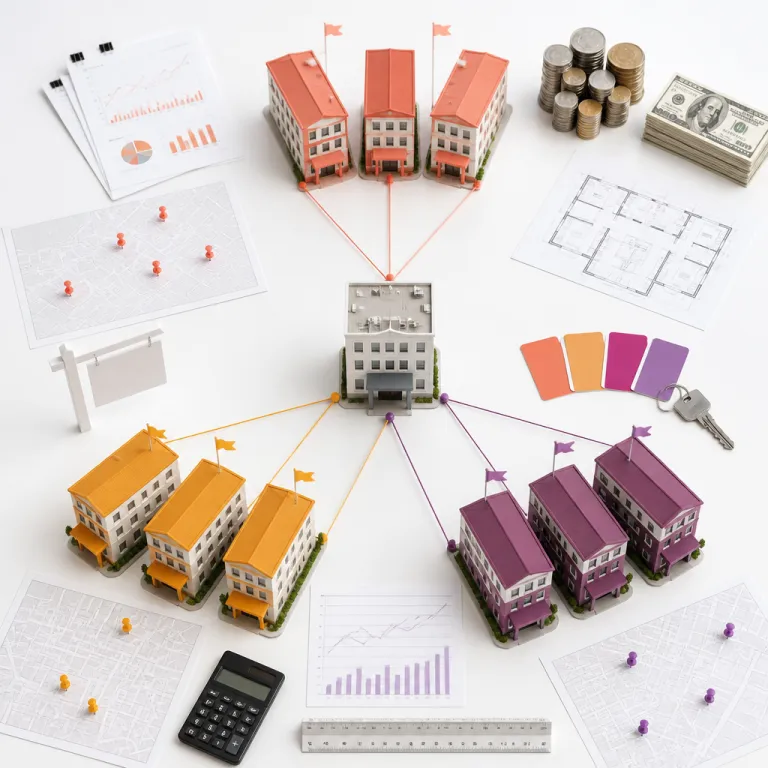
When each of the Big Three offers multiple midscale and upper midscale hotel brands, choice becomes a strategic risk rather than a simple benefit. Owners now face a dense matrix of hotel brand options, from conversion focused soft brands to more prescriptive upper midscale flags, all promising superior guest experience and RevPAR premiums. The hotel midscale brand strategy question is no longer “flag or independent” but “which of these overlapping brands actually fits my asset and my market positioning.”
Hilton hotels now field dedicated conversion platforms in the midscale and upper midscale bands, while its suites and collection concepts stretch into upper midscale and upper upscale territory. Marriott balances legacy midscale brands such as Fairfield and Four Points with flexible conversion formats, while IHG layers new midscale offerings into a portfolio that already spans Holiday Inn, Holiday Inn Express and other midscale hotels. For an owner, these brands can blur together unless you dissect the framework behind each positioning statement and the real design standards that follow.
Branding teams will talk about differentiated design, soft touches in public spaces and localized guest experience narratives. Yet for an asset manager, the critical variables are fee structure, required capital expenditure, achievable occupancy rate and the durability of the brand strategy over a full investment cycle. A rigorous understanding brand analysis should compare not only ADR and index projections but also the risk of future brand repositioning if the segment becomes crowded.
Owners should approach these choices with a portfolio lens, not a one off transaction mindset. A midscale hotel in a secondary U.S. city may need a different brand positioning than a similar hotel in a global gateway, even within the same chain. This is where tools such as a structured hotel brand positioning framework become essential, and resources like hotel brand positioning that survives a conversion offer practical negotiation axes for franchise agreements.
For M&A teams evaluating portfolios of independent hotels, the proliferation of brands creates both upside and complexity. On one hand, multiple soft brands and conversion friendly flags increase exit options and support value creation through rebranding. On the other hand, overlapping midscale and upper midscale offerings from Marriott, Hilton and IHG can dilute clarity in the eyes of guests, which may erode the pricing power that branding is supposed to deliver.
Conversion versus new build: the economics behind the land grab
The current wave of midscale expansion is overwhelmingly conversion led rather than new build driven. For corporate strategists, this is not just a capital light preference but a deliberate hotel midscale brand strategy to capture existing demand pools before competitors do. Converting independent hotels or underperforming properties from other brands allows the Big Three to scale quickly while owners arbitrage brand equity and distribution power.
From an asset management perspective, the math is compelling when the repositioning capex remains disciplined. A well executed conversion into a focused midscale or upper midscale flag can lift occupancy rate and ADR enough to justify franchise and marketing fees, especially when the hotel industry cycle favors branded distribution. The key is to avoid over investing in design upgrades that chase upscale luxury standards while the market will only pay midscale rates.
Soft brands and conversion friendly concepts play a central role in this strategy. They allow hotels to retain some independent hotels character and flexible design while plugging into global loyalty platforms and sales engines. For owners, soft brands can be a way to secure the benefits of hotel branding without fully surrendering control over positioning, F&B concepts or local partnerships.
Case studies from urban lifestyle properties show how thoughtful branding can reframe portfolio strategy. Analyses such as how a lifestyle brand reframes portfolio strategy illustrate how design, market positioning and guest experience can be orchestrated without defaulting to a rigid global template. While that example sits closer to upscale, the same principles apply when a midscale hotel leverages a soft brand to stand out in a crowded segment.
For M&A teams, the conversion thesis should be explicit in the investment memorandum. Is the value creation plan based on moving from an unbranded hotel to a mainstream midscale flag, or from an aging upper upscale brand to a fresher upper midscale concept with lower operating costs. Each path implies different capex, different branding narratives and different sensitivities to local market demand for suites style products or more compact rooms.
The owner’s dilemma: tighter standards, rising fees, thinner margins
While the Big Three compete aggressively for midscale signings, owners sit in a more constrained position. Franchise and system fees have crept upward even as the average daily rate in the midscale segment remains structurally lower than in upscale or upper upscale. The hotel midscale brand strategy of the chains is clear; the P&L reality for individual properties can be far more ambiguous.
Brand standards that once felt soft and negotiable now arrive as detailed design and equipment packages, even for conversion oriented hotel brands. Owners are asked to invest in lobby design, technology and guest experience enhancements that echo upscale luxury cues, while the achievable market rate ceiling remains anchored in midscale. The risk is a squeezed margin profile where the brand captures the upside through fees and loyalty economics, while the owner shoulders the capex and operational complexity.
Hilton hotels, Marriott and IHG all argue that stronger branding and consistent positioning protect long term asset value. In many cases they are right, especially where independent hotels struggle with distribution, digital marketing and revenue management capabilities. Yet asset managers must quantify whether the incremental occupancy rate and ADR lift from a given brand strategy truly compensates for higher fees and stricter standards over a full holding period.
One practical approach is to model multiple scenarios for each potential flag. For example, consider a 110 room independent hotel with an ADR of 110 dollars, 62 percent occupancy and annual NOI of 1.1 million dollars. A conversion to an upper midscale franchise with a 5 percent base royalty and 3 percent marketing fee might require 1.8 million dollars in capex but lift ADR to 125 dollars and occupancy to 70 percent, raising NOI to roughly 1.4 million dollars after fees; in this scenario, the payback period on the conversion investment is about six years, which becomes a concrete benchmark for midscale hotel conversion ROI.
Owners should also negotiate for portfolio level benefits where possible. Committing several properties to a single chain can unlock better key money, more flexible ramp up clauses and tailored branding support. In return, the chain secures greater share of wallet, while the owner gains leverage to adapt design and positioning to specific markets rather than accepting a one size fits all framework.
Independent midscale hotels and the new competitive frontier
For independent hotels operating in the midscale band, the land grab by Marriott, Hilton and IHG changes the competitive baseline. Where a well run independent hotel once differentiated through local design and personal service, it now competes against branded properties that combine similar soft design cues with powerful loyalty ecosystems. The hotel midscale brand strategy question becomes existential; stay independent, join a soft brand or convert fully to a mainstream flag.
Independent owners must start with a clear understanding brand audit. What is the current market positioning in the eyes of guests, corporate buyers and online intermediaries, and how does that translate into occupancy rate, ADR and length of stay. Only with that data can a realistic comparison be made between remaining independent and affiliating with hotel brands that promise global reach and stronger branding.
Soft brands and collection style affiliations, such as some collection Hilton formats or similar offerings from other chains, can offer a middle path. They allow properties to retain distinctive design and local storytelling while benefiting from global distribution, loyalty and revenue management tools. For many midscale and upper midscale assets, this hybrid model can protect long term equity value better than either full independence or a rigid mainstream flag.
Commercial leaders should also revisit how personalization and data driven marketing can level the playing field. Resources such as measurable personalization ROI in hotels show how targeted guest experience initiatives can move the P&L without requiring a global brand behind them. Independent hotels that master CRM, direct booking strategies and sharp branding can still outperform branded competitors on a per property basis.
At portfolio level, funds and family offices should segment their holdings by true competitive set, not by legacy labels such as economy, midscale or upscale. Some assets may benefit from affiliating with Hilton hotels or another global chain, while others may perform better as independent hotels with strong local branding and carefully curated guest experience. The strategic task is to align each property’s brand strategy with its micro market, capital structure and exit horizon, rather than defaulting to the latest midscale flag in the news.
FAQ
Why are major hotel chains entering the midscale market at the same time ?
Major chains are targeting the midscale segment because it concentrates a large volume of demand from budget conscious but brand aware travelers. This band between roughly 100 and 150 dollars per night offers resilient occupancy across cycles and scalable growth through conversions. For Marriott, Hilton and IHG, expanding midscale hotel brands is a way to increase market share and diversify revenue without the capex intensity of luxury or new build upper upscale projects.
How should an owner choose between multiple midscale brands from the same group ?
Owners should compare each hotel brand on four axes; fee structure, required capex, achievable market positioning and operational flexibility. A conversion oriented soft brand may demand less investment and allow more local design, while a mainstream midscale flag may deliver stronger distribution but tighter standards. The right choice depends on the property’s physical layout, target guests, competitive set and the owner’s long term hold or exit strategy.
When does a conversion to a midscale brand create real value for an existing hotel ?
A conversion creates value when the uplift in occupancy rate and ADR, net of fees, exceeds the cost of capex and any disruption during works. This typically requires a clear gap between the current performance of the independent or misaligned branded hotel and the benchmarks for the chosen midscale or upper midscale flag. Asset managers should validate the thesis with detailed market data and conservative underwriting rather than relying solely on brand projections.
What are the risks for independent midscale hotels that stay unbranded ?
Independent midscale hotels risk losing share to branded competitors that leverage loyalty programs, digital marketing and standardized guest experience promises. Without a strong, well executed branding and distribution strategy, independents may struggle to maintain rate and occupancy as more hotel brands enter their markets. However, those that invest in distinctive design, sharp positioning and data driven commercial tactics can still outperform, especially in markets that value local character.
How does the midscale land grab affect portfolio strategy for hotel investors ?
For investors, the midscale land grab requires a more granular portfolio strategy that differentiates between core, value add and opportunistic plays within the segment. Some properties may be best positioned for conversion into global midscale brands, while others should remain independent or align with soft brands to preserve uniqueness. Capital allocation, M&A screening and exit planning must all account for how brand strategy and market positioning will evolve as the Big Three continue to expand their midscale footprints.