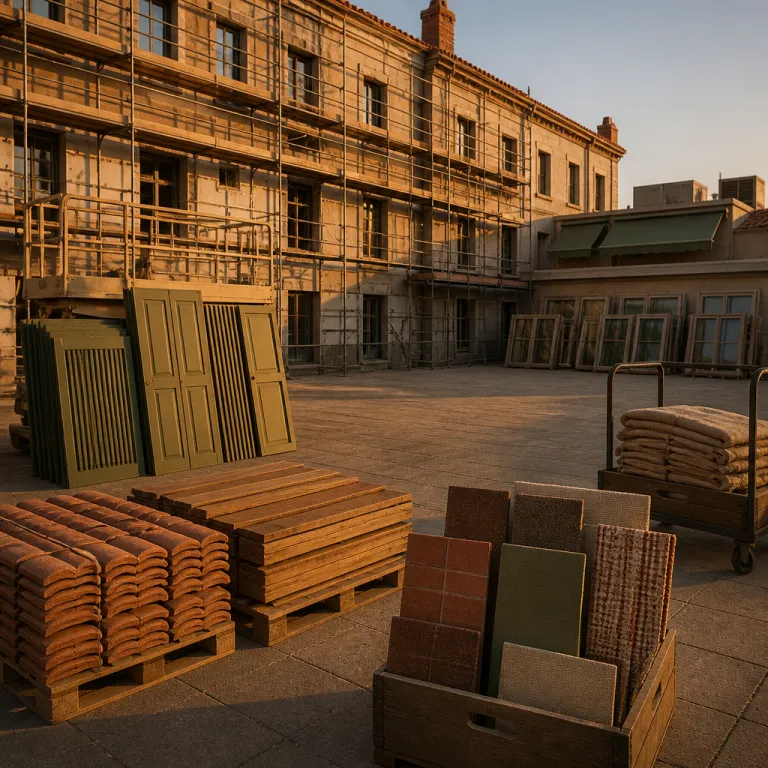
Why hotels associated with account 2026 renovation schedule reshape asset strategy
The 2026 hotel renovation cohort sits at the crossroads of capital discipline and brand repositioning. For senior executives and asset managers, each resort or city hotel in this group becomes a live case study in how refurbishment work can unlock value or quietly erode returns. The portfolio of six major U.S. hotels scheduled for significant upgrades illustrates how timing, scope, and guest communication now define competitive advantage.
When a hotel such as Sheraton Orlando Lake Buena Vista Resort completes a multimillion euro refurbishment of 490 guest rooms, the impact on RevPAR and asset valuation is rarely linear. The same applies when Hard Rock Hotel & Casino Atlantic City commits a large capital improvement plan that will remain in execution over several seasons, while Omni Mount Washington Resort & Spa announces a grand reimagination of a historic resort with complex heritage constraints. This 2026 renovation cohort shows that CapEx planning is no longer a back office spreadsheet exercise but a core element of corporate strategy.
For investment funds and M&A teams, the question is not whether a resort will invest, but how the renovation schedule aligns with exit horizons and debt covenants. Properties in the 2026 renovation schedule often sit in markets where guests enjoy strong brand loyalty, so mismanaging daytime hours of construction or partial closures can damage long term cash flows. Asset managers must therefore model not only the cost of refurbishment work but also the revenue impact when amenities will be offline, when some guest rooms will be closed, and when guests might hear construction during their stay.
From noisy disruption to value creation in CapEx planning
Effective CapEx planning for this 2026 hotel renovation cohort starts with a granular mapping of operational disruption. A resort will rarely shut entirely; instead, management phases work so that a pool, beach resort facilities, or key dining venues remain open while other amenities are closed in rotation. This phasing must be translated into clear guest promises, realistic underwriting, and updated management agreements that align operator incentives with owner risk.
Senior leaders overseeing a resort or club resort asset know that guests value clarity more than vague reassurances about refurbishment. When a hotel communicates that certain guest rooms will undergo work only during daytime hours, and that the main pool or beach access will remain available, the risk of negative reviews drops sharply. For complex integrated resorts, such as casino hotels or large convention properties, this means aligning construction windows with low demand periods and using technology such as strategic telecom architectures for the hospitality industry, as discussed on the dedicated article at this telecom infrastructure strategy resource, to keep internal teams and guests informed in real time.
The 2026 renovation schedule portfolio also highlights the importance of digital transparency. Asset managers should insist that each resort website hosts a precise renovation calendar, so guests read accurate information before booking and do not rely only on third party comments. When guests read Disney or other brand communications about refurbishment work at a beach resort, a wilderness lodge style property, or an urban city hotel, they expect the same level of detail that they would receive from a Walt Disney World resort about changes at Disney’s Animal Kingdom or Disney’s Fort Wilderness campground.
Brand positioning, rebranding, and the hidden cost of renovation timelines
Within this 2026 hotel renovation cohort, many properties combine physical upgrades with brand repositioning or full rebranding. The Cromwell Hotel on the Las Vegas Strip, for example, will undergo a transformation into a new concept, while Rampart Casino and JW Marriott Las Vegas will rebrand as The Resort at Summerlin under a different identity. These moves change not only guest perception but also the long term asset management thesis and the M&A narrative around each hotel.
For corporate strategy teams, the key question is whether the repositioning justifies the extended period during which some amenities will be closed or operating at reduced hours. A grand reimagination such as the one planned at Omni Mount Washington Resort & Spa can support higher average daily rates, but only if the resort emerges with amenities that match or exceed those of peer resorts and club properties. The real cost of such projects often lies in the operational disruption and the learning curve for general managers, as analysed in depth in the article on what a brand conversion really costs beyond the PIP, available at this brand conversion cost analysis.
This 2026 renovation cohort therefore requires a dual lens. On one side, asset managers must model the uplift in value from new rooms, upgraded amenities, and refreshed dining concepts that attract higher spending guests. On the other side, they must quantify the risk that guests hear construction, that some guest rooms will remain out of order longer than planned, or that a pool or beach area will be closed during peak season, which can depress both short term cash flow and long term brand equity.
Guest experience design as a CapEx underwriting variable
In the past, many owners treated guest experience as a qualitative outcome of renovation rather than a core input to CapEx underwriting. The 2026 renovation schedule shows that this approach is no longer viable, because guests now benchmark every resort or hotel against the best in class standards set by global brands. When a grand resort such as a Walt Disney flagship or Disney’s Grand Floridian upgrades its guest rooms, club level lounges, and pool amenities, it sets expectations that spill over into independent resorts and city hotels worldwide.
Asset managers should therefore integrate detailed guest journey mapping into every refurbishment work plan. This includes analysing how guests move from lobby to rooms, how they access dining and club spaces, and how they use beach or pool facilities during different hours of the day. For example, if a beach resort must close its main pool during daytime hours for safety reasons while work continues, the resort will need alternative amenities so that guests enjoy meaningful experiences without feeling that half the property is a construction site.
The 2026 renovation schedule portfolio also demonstrates the importance of acoustic and visual shielding when some areas will remain under construction. When guests hear only faint background noise rather than intrusive drilling, their tolerance for refurbishment increases significantly. This is particularly relevant for mixed use resorts where a club resort wing, a wilderness lodge themed area, or an Animal Kingdom inspired zone may be adjacent to active work, and where careful zoning can protect premium rooms and suites from disruption.
Digital communication, direct booking strategy, and renovation transparency
For senior executives and strategy teams, the 2026 renovation schedule provides a clear lesson on digital communication. Guests now expect to read precise, honest updates on each resort website, including which amenities will remain open, which guest rooms will undergo work, and during which hours guests might hear construction. This transparency is not only a service issue; it is a revenue management lever that influences channel mix and pricing power.
Owners who rely heavily on intermediated demand risk losing control of the renovation narrative, as online travel agencies may not update content quickly or accurately. A robust hotel direct booking strategy, such as the one analysed in the playbook on direct booking after the funnel broke available at this direct booking strategy resource, becomes critical when a resort will operate with partial closures. By steering informed guests to direct channels, hotels in the 2026 renovation schedule can segment demand, protect rate integrity, and reduce compensation costs linked to unexpected disruption.
Communication standards set by large brands also shape expectations. When guests read Disney announcements about phased refurbishment at a club resort, a wilderness lodge themed property, or a beach resort near Disney’s Animal Kingdom, they see detailed calendars, clear maps, and explicit statements about which amenities will be closed. Hotels following the 2026 renovation schedule should emulate this approach, ensuring that guests enjoy a sense of control and that any remaining risk is priced into the offer rather than absorbed as unplanned compensation.
Portfolio level CapEx governance for renovation heavy hotel groups
At portfolio level, the 2026 renovation schedule forces investment funds and hotel groups to rethink CapEx governance. When six significant hotels across the United States commit an estimated 125 million euros in renovations over a single cycle, based on public announcements and trade reporting, the sequencing of projects becomes as important as the design of any single resort. Concentrating too many large refurbishments in the same period can strain corporate teams, dilute brand marketing focus, and increase the risk that multiple hotels will close key amenities simultaneously.
Asset managers should therefore build a rolling, multi year CapEx roadmap that balances guest impact, cash flow, and strategic priorities. This roadmap must integrate both resorts and city hotels, from a grand historic resort in New Hampshire to a casino hotel in Atlantic City or a beach club property in Miami Beach. Hotels associated with account 2026 renovation schedule can serve as anchor projects in this roadmap, around which smaller refurbishments of rooms, dining outlets, and amenities will be scheduled to avoid overlapping disruption in the same feeder markets.
Governance also extends to how information flows between owners, operators, and capital partners. Clear reporting on refurbishment work progress, including when specific guest rooms will remain out of order or when a pool or beach area will reopen, allows funds to adjust distribution policies and M&A teams to refine valuation models. As a practical reminder for travellers, and a useful benchmark for asset managers, the following guidance remains valid: “Check renovation schedules before booking. Expect possible disruptions during stays. Inquire about completed upgrades.”
Key figures for hotels associated with account 2026 renovation schedule
- Six major hotels in the United States are currently identified as hotels associated with account 2026 renovation schedule, spanning resorts, casino hotels, and a beach club property, which creates a diversified test bed for CapEx strategies across segments.
- These hotels collectively represent approximately 125 million euros in planned renovation investment, based on a synthesis of brand press releases and industry coverage, a scale that can materially influence regional competitive dynamics and asset valuations when projects complete.
- Sheraton Orlando Lake Buena Vista Resort alone includes around 490 guest rooms, so a full refurbishment of this single resort has a measurable impact on room supply quality in the wider Orlando market.
- The renovation timeline for these hotels extends across an entire calendar cycle, with different properties starting or completing work in separate months, which underlines the importance of precise phasing and portfolio level CapEx governance.
FAQ about CapEx planning for hotels associated with account 2026 renovation schedule
Which hotels are currently considered hotels associated with account 2026 renovation schedule?
The main hotels associated with account 2026 renovation schedule include Sheraton Orlando Lake Buena Vista Resort, Hard Rock Hotel & Casino Atlantic City, Omni Mount Washington Resort & Spa, The Cromwell Hotel in Las Vegas, Rampart Casino and JW Marriott Las Vegas transitioning to The Resort at Summerlin, and Cadillac Hotel & Beach Club in Miami Beach. Each of these resorts or hotels has publicly announced significant refurbishment work or rebranding initiatives. Together they form a representative sample of resort, casino, and beach resort assets undergoing strategic CapEx programmes.
How do renovations at these hotels affect guest experience and revenue?
Renovations at hotels associated with account 2026 renovation schedule can temporarily reduce available guest rooms, close certain amenities, or limit access to pool, beach, or dining facilities during daytime hours. If guests hear construction or find that key amenities are closed without prior notice, satisfaction scores and ancillary revenue can drop sharply. When communication is clear and phasing is well planned, however, guests enjoy upgraded rooms and amenities that support higher rates and stronger long term revenue.
What are the most common renovation goals for these hotels?
The most common goals for hotels associated with account 2026 renovation schedule are to enhance guest experience, modernise facilities, and increase competitiveness in their respective markets. This often includes full refurbishment of guest rooms, upgrades to club and dining spaces, and improvements to pool and beach resort amenities. In some cases, such as The Cromwell Hotel or The Resort at Summerlin, the work also supports a broader repositioning or rebranding strategy.
How should asset managers integrate renovation schedules into valuation models?
Asset managers should treat hotels associated with account 2026 renovation schedule as assets with a defined transition period, during which cash flows will be temporarily depressed and capital outlays elevated. Valuation models need explicit assumptions about the duration of refurbishment work, the proportion of guest rooms out of order, and the timing of amenity reopenings. Once upgrades are complete, models should reflect expected uplifts in average daily rate, occupancy, and ancillary spend based on comparable resorts and city hotels.
What practical steps can hotel groups take to manage guest expectations during renovations?
Hotel groups managing hotels associated with account 2026 renovation schedule should publish detailed renovation calendars on each resort website, update booking engines with clear notices, and train front office teams to explain which amenities will remain open. They should also schedule the noisiest work during limited daytime hours, offer alternative experiences when a pool or beach area must be closed, and proactively communicate with loyalty members. This approach helps ensure that guests enjoy their stay despite refurbishment and that long term brand equity is protected.