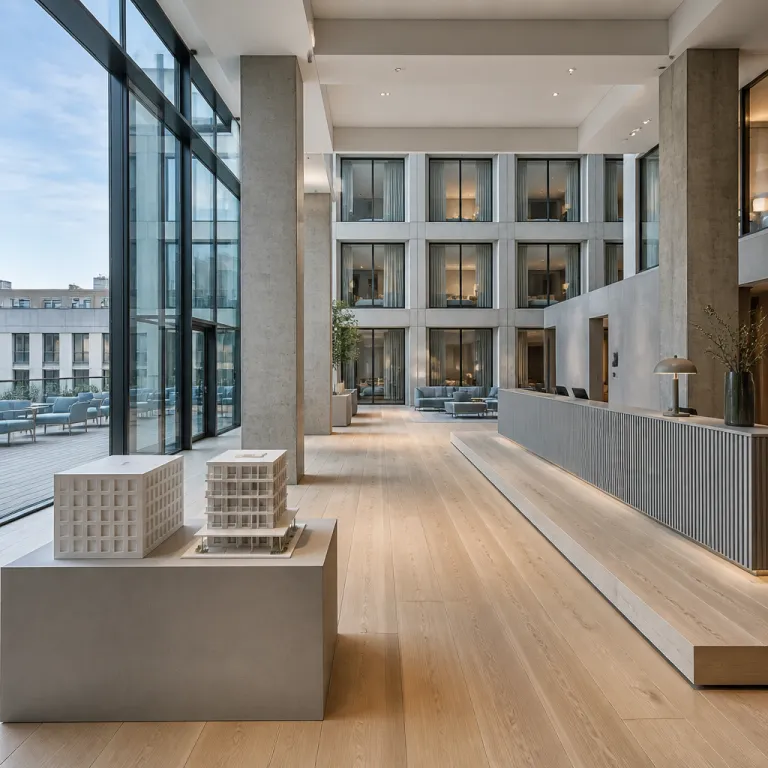
Why hotel adaptive reuse economics now sit at the core of growth strategy
Hotel adaptive reuse economics have moved from niche tactic to core growth lever. Elevated financing costs and construction inflation mean that every new hotel building must clear a higher hurdle rate to justify ground up construction. For dirigeants and asset managers, the question is no longer whether adaptive reuse is interesting, but which existing buildings genuinely merit conversion capital.
The structural shift in many urban office markets is brutal, with persistent vacancies creating a pipeline of existing structures that can be repositioned into hotel assets at a discount to replacement cost. In downtown New York City, for example, CBRE’s 2023 U.S. Office Figures reported office vacancy of roughly 19 percent, while STR data for the same year showed Manhattan hotel RevPAR recovering to within about 6 percent of 2019 levels. In central London, CBRE tracked West End and City office vacancy around 9 to 10 percent in late 2023, while STR reported London hotel RevPAR at roughly 5 percent above its 2019 benchmark, driven largely by rate. This imbalance between underutilised offices and resilient hotel demand in prime locations is exactly where adaptive reuse projects can unlock value, but only when the underlying building economics and the built environment context align.
At portfolio level, the economics of a single reuse project must be read against brand architecture, capital allocation priorities and long term hold assumptions. A boutique hotel conversion in a historic building may deliver an exceptional RevPAR index but still be inferior to a branded select service hotel in a newer existing building with lower capital expenditure per key. In one European capital, a 120 key heritage conversion opened with a RevPAR index above 140 but required more than €260,000 per key in total investment, while a nearby office to select service conversion stabilised at a RevPAR index of 115 on roughly €165,000 per key and a shorter build schedule. The strategic play is to treat each adaptive reuse project as one move in a broader heritage and sustainability thesis, not as a one off construction story; in my own advisory work, the most successful owners explicitly map each conversion to a long term narrative about circular economy, brand mix and capital recycling.
The feasibility screen: when an office building can actually become a hotel
Before any financial model, hotel adaptive reuse economics start with physical feasibility. Floor plate depth between roughly 12 and 20 metres usually allows efficient double loaded corridors, while deeper office buildings often require costly structural interventions that erode the reuse thesis. Minimum slab to slab ceiling heights around 2,7 metres are needed to meet modern building standards and brand expectations once mechanical systems and design elements are installed.
Plumbing core density and location determine how much you can reuse existing vertical shafts instead of opening new ones through older buildings. Structural grid spacing, typically optimised for office loads, must be compatible with hotel room modules and public space spans without excessive transfer beams or new columns. Window to wall ratios in many historic buildings are generous, which supports both guest experience and energy efficient retrofits, while some post war office buildings have limited glazing that undermines the boutique hotel positioning many investors target.
Zoning and use change requirements can quietly kill an otherwise attractive reuse project, especially in tightly regulated sustainable urban districts. City planners may welcome preservation adaptive strategies that protect heritage buildings and cultural heritage, but they will still enforce parking minimums, loading constraints and community impact reviews. In New York, for instance, several Midtown office to hotel proposals stalled when loading dock access and special permit conditions could not be reconciled with brand standards. The Andaz Vienna to Hyatt Regency brand conversion is a useful case study in how a non standard building and operating model can be reworked to meet a mainstream brand’s building standards and room mix expectations; the strategic lesson from that conversion story is explored in depth in this analysis of a lifestyle to upper upscale conversion.
From capex to cash flow: decoding hotel adaptive reuse economics
Once feasibility is confirmed, the economics of adaptive reuse hinge on relative capital cost per key versus ground up construction. In many European and North American urban markets, well structured reuse projects can come in 20 to 40 percent below the all in construction cost of a comparable new hotel building on a similar site. That discount is driven by reusing the existing structure, foundations and often the building envelope, which compresses both direct construction costs and development risk. A 2022 JLL study on office to hotel conversions in Western Europe, for example, documented average total project costs of €150,000 to €220,000 per key for reuse schemes versus €220,000 to €280,000 per key for new build hotels in similar locations.
Timeline is the second major driver of hotel adaptive reuse economics, with many office to hotel conversions completing in roughly 12 to 18 months compared with 24 to 36 months for new builds. That acceleration brings forward cash flows, shortens the negative carry period on land and equity, and reduces exposure to construction inflation that can devastate long term underwriting. In markets with strong demand, shaving a year off the development schedule can be worth several percentage points of internal rate of return, even before considering tax credits linked to historic buildings or environmental remediation. One North American conversion of a 1960s office tower into a 200 key select service hotel, documented in a 2021 ULI case study, improved project IRR from a modelled 13 percent for a hypothetical new build to more than 17 percent for the actual reuse scheme, largely due to a 14 month delivery versus an estimated 30 month ground up timeline.
Tax incentives can materially tilt the balance in favour of adaptive reuse, especially when working with heritage buildings or in designated sustainable urban regeneration zones. Historic tax credits, environmental remediation incentives and, in some jurisdictions, circular economy grants for reusing existing structures can collectively offset a meaningful share of the incremental cost of preservation adaptive work. In the United States, the federal Historic Tax Credit programme has supported numerous hotel conversions by offering a credit of up to 20 percent of qualified rehabilitation expenditures, while several European cities provide additional property tax abatements for certified sustainable retrofits. For GMs and operators, the economic story must then translate into a guest journey and experience architecture that justifies the rate premium; this is where treating experience as the operating system, as outlined in this deep dive on guest journey restructuring, becomes central to monetising the unique design and heritage of reuse projects.
Risk, community dynamics and the hidden costs of preservation
Hotel adaptive reuse economics can unravel quickly when risk is underestimated. Asbestos remediation, structural surprises behind existing walls and the need to upgrade older buildings to current fire and seismic codes can add double digit percentage overruns to the original construction budget. These challenges are particularly acute in historic buildings where preservation authorities limit intrusive interventions, forcing more expensive bespoke solutions. A 2020 survey by the National Trust for Historic Preservation in the US found that unforeseen conditions added an average of 8 to 15 percent to rehabilitation budgets for complex heritage projects, with several hotel conversions reporting contingency drawdowns at the upper end of that range.
Community dynamics are another decisive variable, because adaptive reuse projects often sit at the heart of dense urban neighbourhoods. Local residents may support the preservation of heritage buildings and the activation of dead office frontages, yet still oppose late night activity, loading noise or perceived pressure on public space. Early engagement with the community and city planners can turn a potentially adversarial process into a collaborative one, especially when the project narrative emphasises sustainability, reduced environmental impact and the benefits of reusing existing buildings instead of demolishing them. In Lisbon and Barcelona, for instance, several high profile conversions only secured final approvals after developers agreed to limit rooftop bar hours, invest in streetscape improvements and formalise local hiring commitments.
Labour and operating model risks also intersect with hotel adaptive reuse economics in ways many underwriting models ignore. Conversions in unionised markets must anticipate future labour contract cliffs, where wage and benefit resets can materially change the operating margin profile of a boutique hotel or full service property; the implications of such shifts for asset value are analysed in this piece on the labour contract cliff and smart operator preparation. For asset managers, the lesson is clear: a reuse project is not just a construction play, it is a long term operating commitment embedded in a specific regulatory and community ecosystem, and the most resilient business plans explicitly model labour cost scenarios over the full hold period.
The eight question decision framework for office to hotel conversions
Hotel adaptive reuse economics benefit from a disciplined, repeatable screening framework before engaging architects or contractors. First, does the office building sit in a micro location where hotel demand, rate structure and seasonality patterns support the intended positioning over the long term. Second, do the floor plate, ceiling heights, structural grid and window configuration allow an efficient room layout and public space design without heroic structural surgery.
Third, can the project meet current and foreseeable building standards for fire safety, accessibility and energy performance while still respecting preservation constraints on heritage buildings. Fourth, what is the realistic all in cost per key, including contingencies for existing building unknowns, compared with recent case study benchmarks for both reuse and new construction in the same built environment. Fifth, which tax incentives, sustainability linked financing tools or circular economy programmes can be accessed to reward the environmental impact reduction achieved by reusing existing structures.
Sixth, how will the brand selection, whether a global flag or an independent boutique hotel concept, interact with the constraints and opportunities of the existing building and its cultural heritage. Seventh, what are the key community and regulatory risks, from zoning and use change approvals to potential opposition from neighbours concerned about noise, traffic or loss of office jobs. Eighth, does the operating model, including labour structure, technology stack and guest experience design, align with the physical reality of the reuse project and the long term asset management strategy for the wider portfolio; in practice, owners who run this eight question screen rigorously tend to walk away from more buildings than they convert, but the projects they do pursue usually deliver stronger risk adjusted returns.
Value add asset management in adaptive reuse portfolios
Once a conversion opens, hotel adaptive reuse economics shift from development metrics to operating performance and capital recycling. Asset managers should treat each reuse project as a live case study in how design, sustainability features and heritage positioning translate into rate, occupancy and ancillary revenue. The most successful portfolios institutionalise these learnings, feeding them back into underwriting assumptions for future reuse projects and into brand negotiations around building standards flexibility.
Energy performance is a central lever, because many existing buildings were never designed for hotel level hot water loads, ventilation or plug density. Investing in energy efficient systems, from heat pumps to smart room controls, can materially reduce operating costs while supporting sustainability narratives that resonate with both guests and lenders. Over time, these investments also protect value as regulations tighten around environmental impact and as financing markets increasingly reward sustainable urban assets that embody circular economy principles. A 2023 analysis by the World Green Building Council noted that certified green hotels in several European markets achieved energy cost savings of 15 to 25 percent compared with non certified peers, while also benefiting from improved debt pricing and higher investor demand.
Strategic asset management in adaptive reuse portfolios also means knowing when not to convert. Some office buildings will remain better suited to alternative uses, such as residential or mixed use, once a rigorous feasibility and economic screen is applied. As one industry reference succinctly puts it, “What is adaptive reuse?” and “Why convert offices to hotels?” are not academic questions but the starting point of a disciplined capital allocation process where repurposing existing buildings for new uses and utilising vacant spaces to meet hotel demand must be weighed against structural limitations, zoning regulations and cost considerations. In my experience, the owners who are most honest about these trade offs build portfolios where each conversion feels inevitable in hindsight, because the numbers, the building and the neighbourhood all clearly support the hotel story.
FAQ
What is adaptive reuse in the context of hotels ?
Adaptive reuse in hotels means repurposing an existing building, often an office or industrial asset, into a functioning hotel while retaining much of the original structure. This approach leverages existing structures and foundations to reduce construction time, capital expenditure and environmental impact. In practice, it combines architectural preservation, new hotel design and upgraded building systems to meet modern guest expectations and regulatory standards; a 2019 study by the American Institute of Architects, for instance, found that building reuse can save between 50 and 75 percent of embodied carbon compared with demolition and new construction.
When is converting an office building into a hotel financially attractive ?
An office to hotel conversion is financially attractive when the acquisition price plus conversion cost per key sits meaningfully below the replacement cost of a comparable new hotel in the same market. The project must also benefit from a strong hotel demand profile, realistic room count, and a timeline advantage that brings cash flows forward relative to ground up construction. Tax incentives, such as historic or environmental credits, and lower environmental impact from reusing existing buildings can further improve the investment case; several published case studies from ULI and JLL show IRR uplifts of 200 to 400 basis points for well structured reuse projects versus hypothetical new build alternatives.
What are the main technical challenges in office to hotel conversions ?
The main technical challenges include floor plate depth that is too large for efficient room layouts, insufficient ceiling heights, and structural grids that conflict with hotel room modules. Plumbing and mechanical systems in older office buildings are often inadequate for hotel use, requiring extensive upgrades. Compliance with current fire, accessibility and energy codes, especially in historic buildings with preservation constraints, can also add complexity and cost, which is why many experienced developers now insist on intrusive surveys and detailed engineering due diligence before finalising acquisition pricing.
How does adaptive reuse support sustainability goals for hotel investors ?
Adaptive reuse supports sustainability by retaining existing structures and reducing the need for new materials, which lowers embodied carbon compared with demolition and new construction. Many projects also upgrade to more energy efficient systems, improving operational performance and reducing long term environmental impact. For investors, these sustainability gains can unlock green financing, enhance asset liquidity and align with corporate ESG commitments; in several European markets, green loans for certified sustainable hotels have priced 10 to 30 basis points inside conventional debt, directly improving project economics.
What role do city planners and the community play in hotel reuse projects ?
City planners control zoning, use change approvals and building standards, so their support is essential for any office to hotel conversion. They often favour projects that revitalise urban areas, preserve heritage buildings and contribute to sustainable urban development. Local communities influence political support and can shape project conditions around noise, traffic and public space, making early, transparent engagement a critical success factor; in practice, the most resilient projects treat neighbours as long term stakeholders rather than obstacles to be managed during the permitting phase.