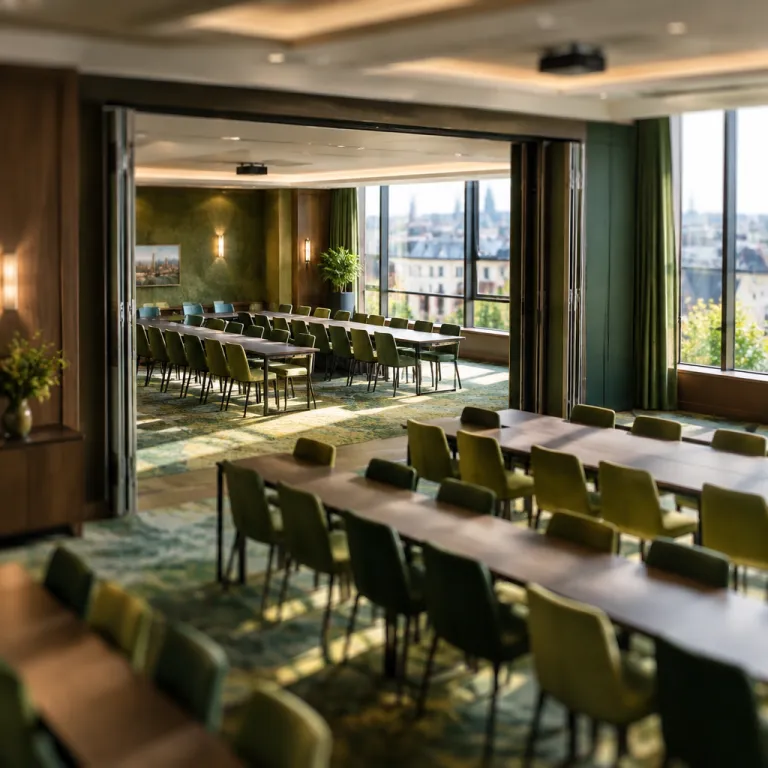
Fursetgruppen hotel meeting capacity as a strategic asset lever
Fursetgruppen hotel meeting capacity in Oslo is no longer a simple operational metric. It has become a core variable in how senior executives and asset managers structure the events profile of a mixed use hospitality asset, especially when conference demand drives both RevPAR and ancillary revenue. For investors evaluating hotels and venues, the way meeting rooms and guest rooms interact now shapes underwriting assumptions as much as traditional location analysis.
Meet Ullevaal, operated by Fursetgruppen Oslo in partnership with Thon Hotel Ullevaal Stadion, illustrates how a single venue can shift portfolio strategy. According to publicly available venue specifications from the operator and hotel (operator stated figures, not independently audited), the largest conference room and adjacent meeting rooms can host up to 800 delegates in theatre or standing formats, which positions this venue as one of the best large scale meetings and events platforms in the city. That scale of meeting room and event demand will influence both lease structures and management contract negotiations for any hotel directly connected to the stadium complex.
For asset managers, the question is not only how much space exists, but how flexibly that space can be monetised across events. At Meet Ullevaal, the combination of high quality catering, restaurant capacity for around 450 seated guests as stated in Fursetgruppen and Thon Hotel material (again, operator reported numbers), and 144 partner guest rooms at the hotel creates a vertically integrated events ecosystem. When Fursetgruppen hotel meeting capacity is modelled explicitly as an input rather than an afterthought, the venue can provide stabilising cash flows that offset seasonality in transient business and leisure demand.
From venue layout to EBITDA uplift : modelling capacity and mix
Understanding Fursetgruppen hotel meeting capacity requires going beyond headline numbers and into layout specific economics. The same rooms configured in theatre style for 800 people will generate a very different revenue and cost profile than a series of smaller board style meetings using multiple meeting rooms. Asset managers need granular data on how each conference room and meeting room performs by layout, day of week, and segment.
At Meet Ullevaal in Oslo, the ability to switch between theatre, classroom, banquet, and board formats turns one venue into several distinct venues from a revenue management perspective. When a single room meeting can be upsold with high quality catering from the on site restaurant, the effective yield per square metre of space increases significantly. This is where sophisticated owners benchmark against case studies such as how a strategic laboratory approach to hotel asset performance can be applied, using meeting capacity as a test bed for pricing, packaging, and event mix optimisation.
For M&A teams, due diligence on Fursetgruppen hotel meeting capacity should include scenario modelling for different events profiles rather than assuming a single base case. One scenario might prioritise large corporate conferences and conferences with plenary sessions for 800, while another focuses on a higher number of smaller events that use private dining style spaces for premium experiences. Each scenario will provide a different EBITDA trajectory, which in turn affects valuation, debt sizing, and the attractiveness of the hotel and venue to institutional capital.
Linking meeting capacity, brand standards, and capital allocation
Fursetgruppen hotel meeting capacity also interacts with brand standards and capital planning in ways that are often underestimated. When a hotel is physically or commercially linked to a major venue, as with Thon Hotel Ullevaal Stadion and Meet Ullevaal, the brand’s requirements for meeting rooms, guest rooms, and restaurants or spas must be reconciled with the operator’s events strategy. Asset managers who ignore this alignment risk under investing in critical space or over investing in low yielding rooms.
In Oslo, demand for large venues and flexible meeting rooms has increased as corporate clients seek hybrid events and conferences that combine in person and digital experiences. Owners evaluating Fursetgruppen Oslo assets need to assess whether existing conference room layouts, back of house logistics, and technology infrastructure will provide the best platform for this demand over the next investment cycle. Strategic guidance on where to push for flexibility in brand standards, and where strict compliance underpins flag value, becomes essential when deciding how much capital to allocate to meeting and event space.
Transaction advisers looking at hotels and venues along key axes such as Tjuvholmen allé or near Ullevaal should integrate a detailed review of meetings and events performance into their investment memos. When first hotels event spaces count most for asset performance, the ability of a venue to host large events, intimate private dinners, and mid scale conferences in the same footprint can materially change the risk profile. This is especially true in markets like Oslo where high quality venues are limited and where a single strong events profile can anchor corporate demand for an entire cluster of hotels.
Oslo case study : Meet Ullevaal versus waterfront venues
For senior decision makers comparing Fursetgruppen hotel meeting capacity at Meet Ullevaal with more boutique venues near Tjuvholmen, the trade offs are clear. The stadium complex offers scale, with a maximum of around 800 people for standing receptions and theatre style conferences, while Tjuvholmen venues often prioritise premium experiences over raw capacity. Asset managers must decide whether their portfolio strategy in Oslo favours volume driven events or high yield, lower capacity formats.
Waterfront venues around Tjuvholmen allé, including restaurants such as Tjuvholmen Sjømagasin, can provide a different type of event platform. A venue Tjuvholmen style concept with a private dining room and curated restaurant experiences will attract board level meetings, investor dinners, and brand launches that value intimacy and gastronomy. These events may use fewer meeting rooms and guest rooms, but they often generate higher spend per delegate and can be packaged with stays in nearby design led hotels.
By contrast, Meet Ullevaal’s events profile is built around large conferences, corporate kick offs, and association meetings that require substantial space and efficient logistics. The venue can provide integrated catering, easy access to 144 guest rooms at the partner hotel, and direct transport links to the rest of Oslo and key business districts. For investors, the optimal strategy may involve holding both types of venues in a city portfolio, using the high capacity stadium venue to secure base demand and the Tjuvholmen style assets to capture premium margin events.
Operational levers : from send request to repeat corporate contracts
Translating Fursetgruppen hotel meeting capacity into sustainable asset performance depends on how efficiently demand is captured and converted. The digital journey from the first send request on a venue website to a signed contract must be frictionless for corporate clients planning meetings and events. Asset managers should track conversion rates by event type, venue, and room configuration to identify where operational bottlenecks erode potential revenue.
At Meet Ullevaal, the sales team can use detailed capacity charts to provide rapid, accurate responses on available rooms, layouts, and catering options. When a client sends a request for an 800 person conference room, the team can immediately confirm whether theatre, classroom, or banquet style is feasible and what restaurant and bar space will be reserved. This high quality response process not only secures the initial event, but also positions the venue and hotel for multi year framework agreements with large corporates and associations.
Owners should also examine how Fursetgruppen Oslo integrates cross selling between the venue, the hotel, and any affiliated restaurants or spas in the wider portfolio. A guest attending a conference in Oslo might stay in partner hotels, dine at a Tjuvholmen Sjømagasin style restaurant, and use wellness facilities in another asset, all within the same investment platform. When these touchpoints are orchestrated deliberately, the events profile of one venue can lift performance across several hotels and related hospitality assets.
Risk management, hybrid demand, and future proofing capacity
For funds and M&A advisers, Fursetgruppen hotel meeting capacity is also a lens on risk management and future proofing. Large venues that rely solely on traditional conferences may face volatility if corporate travel budgets tighten or if hybrid formats reduce in person attendance. Asset managers must therefore evaluate whether each meeting room and conference room can be adapted for smaller, high value events or for mixed physical digital use.
Meet Ullevaal’s flexible space, with rooms that can shift between plenary sessions and breakouts, offers a hedge against such shifts in demand. The venue can host a full scale 800 person conference one week, then reconfigure into multiple smaller meetings and events with private dining style catering the next, maintaining utilisation. For investors, this adaptability will provide a more resilient cash flow profile and justify targeted capex in technology, acoustics, and F&B infrastructure.
In parallel, owners should benchmark Fursetgruppen Oslo assets against other leading venues in Oslo to ensure they remain among the best options for corporate planners. This includes monitoring how hotels and venues along Tjuvholmen allé and other prime districts position their events profile, guest rooms, and restaurants or spas. When capacity, quality, and flexibility are aligned, Fursetgruppen hotel meeting capacity becomes not just an operational fact, but a strategic advantage in any hospitality investment thesis.
Key figures on Fursetgruppen meeting capacity and asset performance
- Meet Ullevaal in Oslo can host up to 800 people in theatre style or standing reception formats in its largest room, which places this venue among the highest capacity conference facilities in the Norwegian capital for single room events. This figure is based on operator published capacity data from Fursetgruppen and Thon Hotel Ullevaal Stadion.
- The on site restaurant capacity of approximately 450 seated guests, as indicated in Fursetgruppen and Thon Hotel Ullevaal Stadion descriptions, allows the operator to serve more than half of a full scale conference in a single sitting, which is a critical factor when modelling F&B revenue and service times for large events.
- The partner Thon Hotel Ullevaal Stadion provides 144 guest rooms directly connected to the venue, according to the hotel’s stated room inventory, creating an integrated meetings and accommodation product that reduces logistical risk for large corporate and association conferences.
- By combining high capacity meeting rooms with strong F&B infrastructure, Fursetgruppen can support a wide range of events, from 800 person plenary conferences to smaller private dinners, which improves utilisation rates across weekdays and seasons.
FAQ on Fursetgruppen hotel meeting capacity and investment strategy
What is the largest meeting room capacity at Meet Ullevaal?
What is the largest meeting room capacity at Meet Ullevaal? Up to 800 people in theatre or standing formats, based on official capacity figures published by the venue and partner hotel. These are operator stated numbers rather than independently verified measurements, so asset managers should confirm them during technical due diligence and treat the figure as a core input when assessing the potential events profile and revenue ceiling of the venue.
How many hotel rooms are available for overnight guests?
How many hotel rooms are available for overnight guests? 144 hotel rooms via partner Thon Hotel Ullevaal Stadion, as stated in the hotel’s own room inventory. This inventory allows the complex to host sizeable residential conferences while still relying on additional hotels in Oslo for overflow demand.
How should investors model Fursetgruppen hotel meeting capacity in underwriting?
Investors should segment demand by event type, layout, and length of stay, then link each scenario to specific meeting rooms and guest rooms. Sensitivity analyses around utilisation of the 800 person capacity, restaurant throughput, and average spend per delegate will provide a realistic range for EBITDA outcomes, rather than a single deterministic forecast.
What role do Tjuvholmen and waterfront venues play alongside Meet Ullevaal?
Waterfront venues near Tjuvholmen allé, including high end restaurants such as Tjuvholmen Sjømagasin, complement the high capacity stadium venue by offering premium, lower capacity events. A balanced portfolio can use Meet Ullevaal for large conferences and Tjuvholmen style venues for executive meetings and investor events.
Why is flexibility of meeting space so important for asset performance?
Flexible meeting rooms and conference rooms allow a venue to pivot between large conferences, smaller meetings, and hybrid formats as demand shifts. This adaptability stabilises cash flows, supports higher average yields per square metre, and protects asset value through changing corporate travel and events cycles.