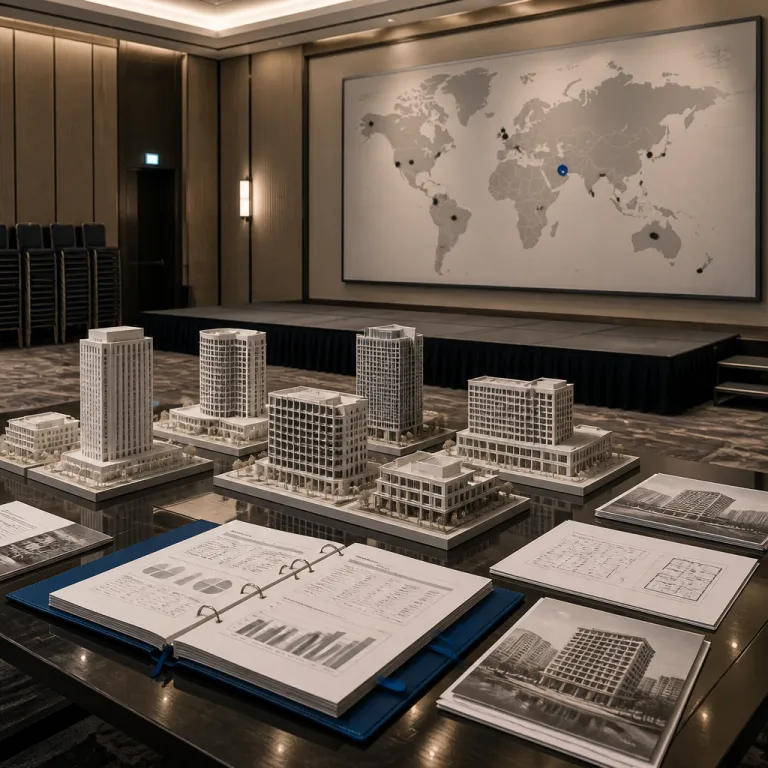
Why the Hunter Conference 2026 is becoming a deal making laboratory for hotel capital
The Hunter Conference 2026 positions itself as the hospitality industry’s premier investment forum for hotel owners, asset managers, and corporate strategists. On the main stage in Atlanta, the event curated by Hunter Hotel Advisors and Georgia State University now operates less as a classic conference and more as a live laboratory for real estate capital flows. For senior decision makers and investment funds, the combination of concentrated hotel owners, developers, and hotel investors in one ballroom over three days creates a rare, efficient market for live negotiations.
Held at the Signia by Hilton Atlanta, the Hunter Conference uses the scale and layout of the integrated convention complex to turn every floor and every food and beverage outlet into a transactional zone. The Dream Ballroom and adjacent spaces host plenary sessions, while smaller rooms allow advisors to structure deals in real time with owners, developers, and brand representatives. This physical configuration matters for M&A because proximity between hotel owners, lenders, and operators compresses the duration between first contact, strategic alignment, and indicative offers; several advisors at recent editions have described moving from initial meeting to signed term sheet within the three day window when counterparties arrive with pre cleared investment mandates.
For corporate strategy teams, the Hunter Conference 2026 is less about generic industry commentary and more about targeted market intelligence on U.S. hotel real estate. Atlanta, Georgia has become a strategic hub for hospitality, and the choice of Atlanta as host city signals a focus on Sun Belt growth, airport hub dynamics, and mixed use urban projects. When Hunter Conference participants walk the Signia by Hilton corridors, they are effectively walking a live case study in brand positioning, revenue optimization, and capital stack structuring for large scale hospitality assets, from convention hotels to lifestyle properties.
Using Hunter Hotel Advisors’ ecosystem to read the real estate cycle
For asset managers, the real value of the Hunter Conference lies in how Hunter Hotel Advisors orchestrates conversations between buyers, sellers, and lenders across the hospitality spectrum. Hunter’s advisory teams sit at the intersection of hotel investment banking and operational consulting, which gives them a privileged view of pricing expectations and underwriting standards. When they moderate sessions or private Teague Talks, they implicitly reveal where the market is resetting cap rates, debt terms, and brand performance assumptions; in recent years, for example, panelists have discussed cap rate movements for select service assets relative to pre pandemic benchmarks, highlighting how risk premiums have shifted for different flags and locations.
In Atlanta, Georgia, the Hunter Hotel ecosystem gathers regional owners and national hotel investors who rarely share detailed data outside such a conference environment. During panels in the Dream Ballroom, participants openly compare revenue per available room, food and beverage margins, and brand contribution costs across different hotel flags. This willingness to share real performance indicators allows senior executives and strategy teams to benchmark their own portfolios against a live, self selected peer group, rather than relying solely on anonymized industry surveys or lagging data sets.
For groups weighing acquisitions or disposals, the Hunter Conference 2026 offers a concentrated read on where the real estate cycle stands for limited service, select service, and full service assets. A session might contrast urban Signia by Hilton type projects with secondary market roadside hotels, highlighting diverging risk profiles and exit strategies, such as shorter hold periods for value add repositionings versus longer, core style ownership for gateway convention assets. Strategic investors can then refine their pipeline, deciding whether to prioritize core urban assets, value add repositionings, or opportunistic buys in markets where distress is emerging. For a deeper perspective on how ownership choices shape long term value, many investors now review independent case studies on strategic independence in regional hotels, using those lessons as parallels for decisions made on the Hunter Conference floor.
From ballroom stage to balance sheet: translating conference insights into M&A theses
Panels on the main stage at the Hunter Conference are not just content; they are raw material for M&A theses. When speakers dissect brand strategy, loyalty economics, and direct distribution, they are effectively providing the qualitative layer that underpins valuation models. For corporate development teams, the challenge is to capture these insights in the Dream Ballroom and translate them into concrete assumptions about revenue growth, margin expansion, and exit multiples, often adjusting underwriting by 50 to 150 basis points on projected RevPAR growth after hearing updated guidance from brand leaders.
Sessions that examine how a brand’s digital reach compresses the traditional hotel search funnel are particularly relevant for acquisition screening. When strategists understand that a significant share of travelers may never see a hotel website first, they can reassess the value of brand affiliation, franchise fees, and marketing technology platforms in any target. Resources such as detailed analyses of what brand strategy means when the hotel search funnel collapses help Hunter Conference participants connect distribution dynamics with real estate underwriting, especially when evaluating whether independent positioning can sustain comparable demand at lower fee structures.
On the Hunter Conference floor, this thinking becomes very practical as owners and developers debate whether to stay with a legacy brand or pivot to a new flag at PIP renegotiation. Asset managers use live conversations with advisors and brand representatives to stress test whether projected revenue uplifts from rebranding are realistic, often asking for concrete case studies where a flag change delivered a 5 to 10 percent RevPAR premium within two years. One asset manager described walking out of a Dream Ballroom session, sitting down with a brand team in a breakout room, and revising a live pro forma on a laptop based on that discussion. The Hunter Conference 2026 therefore acts as a filter, separating narrative from evidence and helping senior leaders decide which M&A stories deserve capital and which should remain on the conference circuit.
Leadership signals from the Hunter Conference: reading people, not just panels
For serious investors, the Hunter Conference is also a rare opportunity to assess leadership quality across the hospitality industry. When a president or CEO steps onto the stage, their clarity on capital allocation, brand architecture, and technology priorities becomes a direct input into investment decisions. The way they handle questions about debt covenants, pipeline discipline, and asset light models often reveals more than any slide deck, especially when they reference specific leverage targets, development hurdles, or return thresholds in unscripted Q&A.
Figures such as Lee Hunter, Colin Flannery, Riana Stadlen, and Sarah Moss contribute to this leadership mosaic when they participate in Teague Talks or moderated discussions. Each voice brings a different angle on hotel ownership, advisory practice, or corporate strategy, and the interplay between them helps investors gauge alignment across the ecosystem. When a hotel brand executive and a major owner share the same view on risk sharing and performance metrics, that alignment can materially de risk a long term franchise or management agreement; as one owner remarked in a recent session, “We only sign thirty year deals when the brand’s incentives are visibly tied to our cash flow.”
In the corridors of the Signia by Hilton, informal conversations with hotel owners and investors often matter as much as the formal program. Asset managers watch how potential partners behave under time pressure, how they negotiate small points over food and beverage events, and how they respond to shifting market narratives. The Hunter Conference 2026 thus becomes a live due diligence environment where character, culture, and strategic discipline are tested in real time, long before any term sheet is drafted or joint venture is announced.
Designing a conference playbook for asset managers and strategy teams
To extract full value from the Hunter Conference, asset managers and strategy directors need a structured playbook. The first step is to treat registration not as an administrative task but as a strategic allocation of limited time and attention across the three day program. Teams should map which sessions in the Dream Ballroom, which Teague Talks, and which side meetings align with their current M&A pipeline, refinancing needs, and brand negotiations, rather than drifting between panels based solely on convenience.
Before arriving in Atlanta, leading groups prepare a grid that links each conference session to specific portfolio questions. A panel on real estate capital markets might be tied to decisions about selling non core hotels, while a discussion on food and beverage innovation could inform repositioning plans for underperforming assets. During the Hunter Conference 2026, this grid helps senior leaders decide when to stay in the main ballroom, when to walk the floor for targeted networking, and when to step aside with advisors for confidential conversations that move a live deal toward a letter of intent.
After the event, disciplined teams run a formal debrief that converts conference notes into actionable strategy. They classify insights into three buckets: immediate underwriting adjustments, medium term asset management initiatives, and long term corporate strategy shifts. Many now complement this process with deep dives into loyalty economics and brand performance, using analyses such as evaluations of Kimpton’s hospitality strategy through the lens of loyalty programs to refine how they value different flags. In this way, the Hunter Conference becomes not just an annual gathering but a structured input into continuous portfolio optimization and capital allocation.
Market intelligence, data sharing, and the ethics of competitive transparency
One of the most delicate aspects of the Hunter Conference is the balance between competitive secrecy and collective intelligence. When hotel owners and advisors share performance data on stage, they contribute to a richer understanding of the hospitality market, but they also expose elements of their own strategy. The art lies in sharing enough to benchmark and learn, while protecting the proprietary details that underpin a competitive edge, especially around acquisition pipelines, brand negotiations, or lender relationships.
Panels that address sustainable hospitality, technology integration, and post pandemic recovery often become de facto data rooms for the industry. Speakers might reference occupancy trends, average daily rate shifts, or capital expenditure benchmarks that help investors recalibrate their models for different geographies and asset classes. During one such session, a moderator reminded the audience that “Book accommodations early, utilize the conference app for updates, and explore Atlanta’s attractions,” a practical aside that also highlighted how digital tools and local context shape the overall conference experience and influence how effectively participants absorb and act on market intelligence.
For senior executives and strategy teams, the Hunter Conference 2026 is therefore both an opportunity and a responsibility. They gain access to concentrated market intelligence on hotel real estate, brand performance, and capital flows, but they must also decide what they are willing to share in return. The most sophisticated players arrive with clear internal guidelines on which metrics can be discussed on the conference floor and which must remain confidential, ensuring that participation strengthens both their own position and the broader hospitality ecosystem without breaching fiduciary or regulatory obligations.
Key figures and structural signals from the Hunter Conference
- The Hunter Conference regularly attracts around 2,300 annual attendees, according to its official published figures, which creates a dense network of hotel owners, developers, investors, and advisors in a single venue.
- With a three day format combining opening sessions, keynotes, and closing remarks, the event offers roughly forty eight to sixty hours of concentrated content and networking, far exceeding what most deal teams could replicate through separate roadshows or one off site visits.
- The move to the Signia by Hilton Atlanta reflects a strategic bet on large scale, mixed use hospitality real estate, signaling investor interest in urban convention assets with significant food and beverage and meeting space components that can support group, transient, and local demand.
- Partnerships with organizations such as the American Hotel & Lodging Association and the AHLA Foundation underline the conference’s role as a policy and advocacy touchpoint, not just a commercial marketplace, and give attendees direct exposure to regulatory and labor trends.
- The consistent focus on sustainable practices, technology integration, and post pandemic recovery strategies indicates that future hotel M&A will increasingly price in ESG performance, digital capabilities, and resilience to demand shocks, with investors asking more detailed questions about energy intensity, labor productivity, and system contribution.
FAQ about the Hunter Conference and its strategic value
When does the Hunter Conference take place and how long does it last ?
The Hunter Conference 2026 is scheduled over three consecutive days in March, with an opening day focused on initial sessions, a central day dedicated to keynotes and panels, and a final day reserved for closing discussions and last minute meetings. This three day structure allows investors and hotel owners to layer formal content, private negotiations, and informal networking. For M&A teams, it is long enough to run multiple deal processes in parallel without losing focus or diluting senior attention.
Where is the Hunter Conference held and why does the location matter ?
The event takes place at the Signia by Hilton Atlanta in downtown Atlanta, Georgia, a property that combines large ballroom capacity with extensive meeting and food and beverage spaces. This location matters because it reflects the type of urban, convention oriented real estate that many investors are currently evaluating. The surrounding Atlanta market also offers a live case study in airport hub demand, corporate travel recovery, and mixed use development, giving attendees the chance to observe local performance indicators alongside conference discussions.
How can participants register for the Hunter Conference and prepare effectively ?
Registration for the Hunter Conference typically opens several months before the event on the official website, and early booking is strongly recommended due to high demand. Once registered, serious participants build a tailored agenda that aligns sessions, Teague Talks, and private meetings with their current investment and asset management priorities. Using the conference app to track schedule changes, request meetings, and connect with other attendees is now considered a basic best practice for maximizing return on time invested.
What types of professionals gain the most from attending the Hunter Conference ?
The Hunter Conference 2026 is particularly valuable for hotel owners, asset managers, hotel investors, and corporate strategy leaders from major hotel groups. M&A advisors, lenders, and brand executives also benefit from the concentrated deal flow and market intelligence. For each of these profiles, the event serves as both a sourcing platform and a calibration tool for their view of the hospitality cycle, helping them validate assumptions about demand, pricing power, and capital availability.
How does the Hunter Conference influence real estate and M&A decisions after the event ?
Insights gathered on the conference floor often translate directly into revised underwriting assumptions, adjusted exit strategies, and refreshed brand negotiations. Many senior leaders use the Hunter Conference as a milestone to validate or challenge their annual capital allocation plans across hotel real estate portfolios. The most disciplined organizations run structured post event reviews to convert qualitative impressions from the ballroom stage into quantified decisions on acquisitions, disposals, and repositionings, documenting how specific panels or meetings led to changes in pricing, timing, or partner selection.
