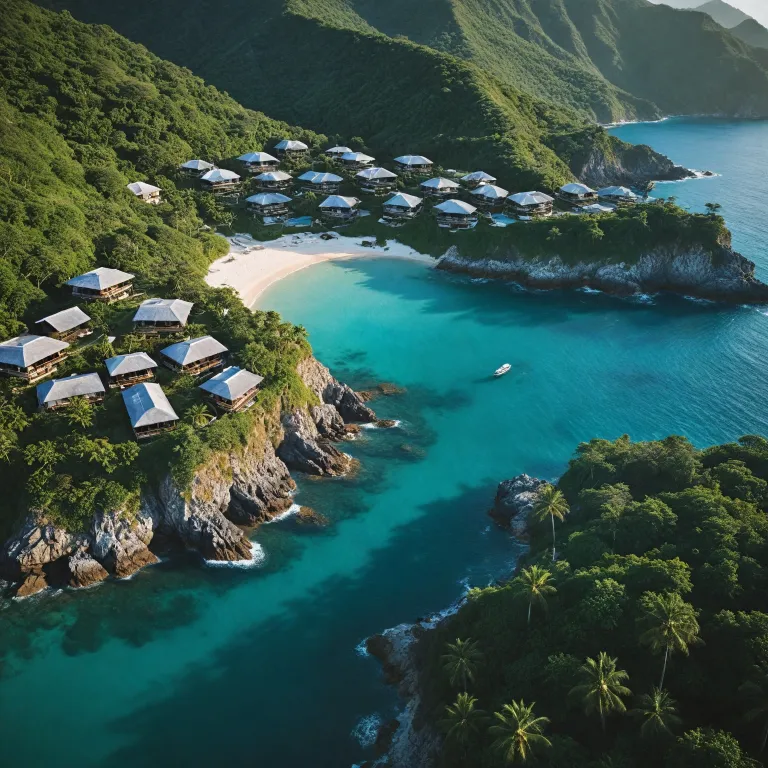
St vincent tourism resort development as a strategic Caribbean test case
St vincent tourism resort development has become a live laboratory for hospitality investors. The Government of St. Vincent and the Grenadines is positioning each resort as a catalyst for economic resilience, while international brands frame every project as a long term platform for regional growth. For dirigeants and asset managers, the islands now offer a rare alignment between public policy, private capital, and measurable tourism outcomes.
The current wave of development is anchored by large scale tourism projects at Mount Wynne and Peter’s Hope, where Sandals Resorts International and Marriott International are reshaping the room stock profile. These projects sit within a broader Caribbean context in which the vincent and grenadines market is moving from underpenetrated destination to institutional grade asset class, supported by a projected 34.5 % increase in room capacity. For M&A teams, this shift transforms Saint Vincent from a peripheral travel outpost into a credible node in regional portfolio strategies spanning Saint Lucia, the Dominican Republic, and the Virgin Islands.
For corporate strategy leaders, the key question is how each development project will influence pricing power, seasonality, and group travel flows across the wider grenadines tourism ecosystem. The tourism authority expects higher value visitors and longer stays, which will directly affect underwriting assumptions for future resort development and secondary transactions. In this context, st vincent tourism resort development is less about isolated hotels and more about orchestrating interconnected projects that reposition the entire destination in the competitive Caribbean islands landscape.
Balancing room stock growth, underwriting discipline, and asset rotation
The projected expansion of room stock in Saint Vincent and the Grenadines forces investors to recalibrate underwriting models. St vincent tourism resort development is expected to lift total room capacity by more than a third, which materially changes the supply demand equation for every existing hotel and resort. Asset managers must therefore model not only individual project room counts but also the cumulative impact on rate integrity and occupancy across the destination.
For M&A teams, the pipeline of projects including the Beaches Resort at Mount Wynne and the Peter’s Hope resort under Marriott’s Autograph Collection creates both acquisition and exit optionality. Each development project adds new room beachfront inventory that can later be traded as stabilized assets, while older properties may be repositioned or bundled in portfolio deals spanning Saint Lucia, Punta Cana in the Dominican Republic, and Turks and Caicos. In this environment, metrics such as average length of stay become central to valuation, making it essential to integrate an advanced view of ALOS as a strategic KPI into every investment case.
From an asset rotation perspective, st vincent tourism resort development offers a phased entry strategy for funds that prefer staged capital deployment. Early commitments to projects with strong tourism authority backing can be complemented by later acquisitions of stabilized hotels once demand from travel markets in North America and Europe matures. This disciplined approach allows dirigeants to arbitrage timing, risk, and yield while maintaining exposure to the long term upside of the vincent grenadines tourism story.
Public private alignment, governance, and risk management in resort development
The governance architecture behind st vincent tourism resort development is as important as the bricks and mortar. The Government of St. Vincent and the Grenadines has adopted a public private partnership approach, using investment agreements, environmental impact assessments, and community engagement to de risk large tourism projects. For institutional investors, this framework reduces entitlement risk and clarifies the path from project room pipeline to operational room stock.
Key actors include Sandals Resorts International, which is developing the family oriented Beaches Resort at Mount Wynne, and Marriott International, which is leading the Peter’s Hope resort under its Autograph Collection. Their presence signals to M&A advisors and strategy teams that the destination is moving into the same league as established Caribbean tourism hubs such as Saint Lucia, the Dominican Republic, and Turks and Caicos. To structure acquisitions and joint ventures effectively, leaders should rely on a rigorous hotel acquisition due diligence checklist that integrates destination level risks, including volcanic activity and climate resilience.
Local leadership also matters, with minister tourism officials such as Hon Carlos James playing a visible role in articulating the long term vision for Saint Vincent and the Grenadines. Statements from the tourism authority emphasize sustainable development, integration of local culture, and the need for tourism projects to support community employment. For asset managers, this alignment between hon Carlos James, the tourism authority, and international developers strengthens the investment thesis for resort development while setting clear expectations on ESG performance and stakeholder engagement.
Competitive positioning versus Saint Lucia, Punta Cana, and Turks and Caicos
St vincent tourism resort development cannot be evaluated in isolation from regional competition. The Caribbean tourism landscape is dominated by mature destinations such as Saint Lucia, Punta Cana in the Dominican Republic, and Turks and Caicos, where resort development cycles are already advanced. For corporate strategy teams, the question is how Saint Vincent and the Grenadines can differentiate its tourism offer while avoiding a race to the bottom on price.
The answer lies partly in product mix and segmentation across projects. The Beaches Resort brand brings a family oriented beaches resort proposition with strong appeal for group travel, while the Autograph Collection resort at Peter’s Hope targets upscale independent minded guests seeking a more intimate hotel experience. Together with planned developments on nearby islands, this mix allows the vincent grenadines cluster to compete not only on room beachfront quality but also on authenticity, sustainability, and cultural immersion.
At the same time, investors must benchmark operating models and cost structures against peers in Saint Lucia, the Virgin Islands, and Punta Cana, where labor markets, utilities, and logistics differ significantly. Strategic use of managed services and shared platforms, as explored in this analysis of operational excellence through managed services, can help resorts in Saint Vincent achieve competitive margins despite smaller scale. For M&A advisors, these operational levers directly influence valuation multiples and the attractiveness of cross border portfolio strategies spanning multiple Caribbean islands.
Operational value creation, ESG, and portfolio level synergies
Once the cranes leave, the real work of value creation in st vincent tourism resort development begins at the operational level. Asset managers must translate development project assumptions into concrete KPIs around RevPAR, F&B capture, and ancillary revenues, while maintaining the ESG commitments embedded in initial approvals. The integration of local culture and sustainable practices into resort designs is not only a branding choice but also a risk management tool for long term tourism resilience.
For funds with exposure across the Caribbean, Saint Vincent and the Grenadines can serve as a diversification and innovation hub. Resorts here can pilot low impact construction methods, renewable energy solutions, and community based tourism programs that may later be rolled out to properties in Saint Lucia, the Virgin Islands, and the Dominican Republic. This portfolio level approach allows dirigeants to capture synergies in procurement, training, and marketing while tailoring each hotel and resort to its specific island context.
Operationally, group travel and MICE segments will be critical to smoothing seasonality and maximizing room stock utilization across the vincent grenadines cluster. Coordinated sales strategies between the Beaches Resort, the Autograph Collection property, and other islands in the grenadines room network can create compelling multi island itineraries. For M&A and strategy teams, these synergies strengthen the rationale for platform investments that bundle multiple resorts, hotels, and tourism assets into scalable Caribbean destination vehicles.
Scenario planning, timing, and strategic options for investors
For investors evaluating st vincent tourism resort development, scenario planning is essential. Demand patterns in Caribbean tourism remain sensitive to global economic cycles, airline capacity, and shifting travel preferences, which can affect both individual projects and the broader destination. Asset managers should therefore build flexible models that test variations in room stock absorption, rate growth, and group travel volumes across the vincent grenadines market.
Timing also matters, particularly around key milestones such as the opening of the Palm Island development and the completion of the Beaches Resort at Mount Wynne. Early movers who commit capital before full stabilization may secure preferential terms and upside participation, while later entrants can focus on acquiring operational hotels with proven tourism demand. In both cases, close monitoring of tourism authority data, airline schedules, and booking trends from core markets will be critical to refining acquisition and exit strategies.
Finally, strategic options extend beyond pure equity investments in resort development projects. Investors can consider mezzanine financing, joint ventures with operators like Sandals, or partnerships with the Government of St. Vincent and the Grenadines to co invest in enabling infrastructure. By structuring capital stacks that reflect project risk profiles and destination level dynamics, dirigeants and M&A advisors can align their exposure with the long term potential of Saint Vincent and the Grenadines as a differentiated Caribbean tourism destination.
Key statistics shaping st vincent tourism resort development
- Increase in visitor arrivals compared with the previous period : 17.3 % according to the Caribbean Tourism Organization.
- Increase in U.S. visitor arrivals compared with the previous period : 58.7 % according to the Caribbean Tourism Organization.
- Projected increase in national room stock once current projects are delivered : 34.5 % according to the St. Vincent and the Grenadines Tourism Authority.
Strategic FAQs for leaders on st vincent tourism resort development
What are the major resort developments in St. Vincent and the Grenadines ?
Major developments include the Beaches Resort at Mount Wynne, Peter’s Hope Resort under Marriott's Autograph Collection, Palm Island Development, and Cumberland Bay Resort.
How will these developments impact the local economy ?
The projects are expected to create over 2,000 jobs and increase the country's room stock by 34.5 %, significantly boosting the local economy.
When are the new resorts expected to open ?
The Palm Island Development Phase One is scheduled to open in December 2026, and the Beaches Resort at Mount Wynne is expected to be completed by the end of 2027.
How should investors approach risk management in this destination ?
Investors should combine rigorous due diligence on each development project with destination level analysis of environmental, regulatory, and demand risks, using scenario planning to test different tourism and room stock outcomes.
What role do public authorities play in these projects ?
Public authorities, including the Government of St. Vincent and the Grenadines and the national tourism authority, facilitate approvals, infrastructure, and policy support, shaping the overall investment climate for resort and hotel development.
References
- Caribbean Tourism Organization
- St. Vincent and the Grenadines Tourism Authority
- Government of St. Vincent and the Grenadines
