From maintenance back office to strategic asset engine
For hotel owners and asset managers, maintenance has long been treated as a necessary cost center rather than a strategic lever. A modern hotel maintenance management system changes this equation by turning every intervention, work order, and inspection into structured data that informs asset management and capital allocation. When maintenance operations are digitized through a robust CMMS and integrated maintenance software, leaders can finally align technical performance with portfolio level value creation.
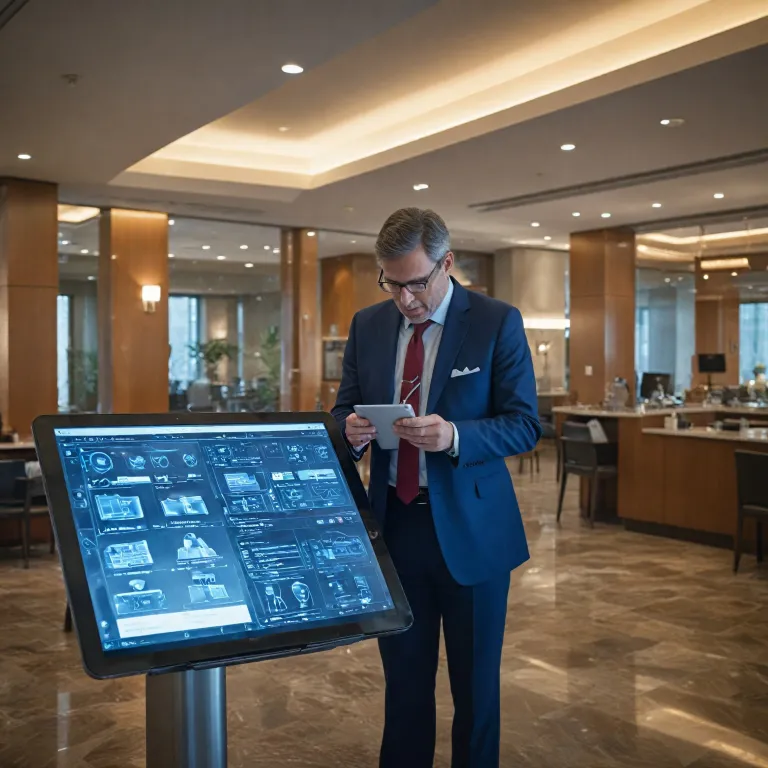
At property level, a hotel maintenance management system centralizes all maintenance tasks, from urgent repairs to long term preventive maintenance plans. Engineering staff and the wider hotel team can submit work orders in real time via mobile tools, while management software automatically prioritizes, assigns, and tracks maintenance tasks across shifts. This reduces time lost in manual coordination, improves work order completion rates, and allows executives to track maintenance performance as rigorously as they track RevPAR or GOP.
For M&A and corporate strategy teams, the shift is even more profound. A standardized hotel maintenance management system across a portfolio creates comparable KPIs on maintenance operations, asset condition, and guest satisfaction impact. These data points feed into asset management models, influence buy or sell decisions, and support value creation plans that link capex, maintenance scheduling, and guest experience. In this context, maintenance management is no longer a back office function ; it becomes a core component of hotel management and corporate strategy.
Due diligence and valuation: maintenance data as a hidden balance sheet
In hotel transactions, the quality of maintenance operations often remains under analyzed compared with brand, location, and financial performance. A hotel maintenance management system can change due diligence by providing granular, auditable records of work orders, preventive maintenance, and asset lifecycle history. Buyers gain a clearer view of technical risk, while sellers can evidence disciplined maintenance management to justify pricing and reduce negotiation friction.
When a target hotel already uses a CMMS or equivalent maintenance software, M&A teams can extract multi year case study style datasets. These include the volume and type of maintenance tasks, average time to close work orders, and the ratio between corrective and preventive maintenance. Such data allows investors to quantify deferred capex, model future maintenance scheduling, and assess whether maintenance operations have supported or undermined guest satisfaction and guest experience. In some case study analyses, a well run hotel maintenance environment can materially reduce perceived risk premiums.
Conversely, the absence of a hotel maintenance management system is itself a signal. It suggests that maintenance management is likely reactive, that track maintenance records are incomplete, and that asset management decisions may have been based on intuition rather than evidence. For corporate buyers building platforms, standardizing a hotel maintenance management system post acquisition becomes a key value creation lever. It allows them to benchmark maintenance operations across hotels, identify outliers, and prioritize capex where work orders and asset failures most threaten guest satisfaction and long term value.
From corrective to preventive: aligning maintenance with guest experience
For strategy and asset management leaders, the most powerful shift enabled by a hotel maintenance management system is the move from corrective to preventive maintenance. By structuring maintenance tasks into recurring schedules, the CMMS reduces unplanned downtime and protects both asset value and guest experience. This is where maintenance management intersects directly with brand promise and pricing power, far beyond simple cost control.
Within a hotel, preventive maintenance plans can be configured in the management software for all critical assets, from HVAC systems to elevators and room equipment. The hotel maintenance team receives work orders automatically, with clear checklists, estimated time, and safety procedures, all accessible on mobile devices. As staff complete these maintenance tasks, the hotel maintenance management system records execution in real time, allowing managers to track maintenance compliance and correlate it with guest satisfaction scores and complaint patterns. Over time, this creates a robust case study for each property, demonstrating how preventive maintenance supports operational stability.
For portfolio level asset management, the data generated by preventive maintenance is even more valuable. It allows leaders to compare maintenance operations across hotels, identify where maintenance scheduling is insufficient, and quantify the impact on guest experience and ancillary revenue. When a hotel maintenance management system shows recurring work orders on the same asset class, it can trigger targeted capex rather than endless repairs. This disciplined approach to maintenance management strengthens underwriting assumptions in M&A, supports higher valuations, and reduces the volatility of cash flows linked to technical failures.
Standardizing maintenance platforms in post merger integration
Post merger integration in hospitality often focuses on brand alignment, distribution, and corporate functions, while maintenance operations remain fragmented. Implementing a unified hotel maintenance management system across the combined portfolio should be treated as a core integration work stream. A single CMMS and maintenance software stack enables consistent processes for work orders, maintenance tasks, and asset tracking, which in turn supports harmonized KPIs and governance.
In practice, integration teams should map existing maintenance management tools, from spreadsheets to legacy systems, and define a target architecture centered on a cloud based hotel maintenance management system. Engineering staff and hotel management must be involved early, as they will rely on mobile interfaces to submit work orders, track maintenance, and coordinate with the central team. Training should emphasize how real time data capture improves both maintenance operations and guest experience, rather than presenting the software as a compliance burden. When staff understand that better maintenance management reduces firefighting and improves working conditions, adoption accelerates.
From a corporate strategy perspective, a standardized hotel maintenance management system also facilitates synergies in procurement and asset management. With comparable data on maintenance scheduling, work order volumes, and asset failure rates, the group can negotiate better service contracts and prioritize capex across hotels. Integration leaders can build a portfolio wide case study showing how unified maintenance operations improved guest satisfaction and reduced downtime. For sustainability focused strategies, this same data supports initiatives such as eco friendly retrofits, which can be further explored through resources on eco friendly lodging solutions as a strategic lever for hospitality M&A and asset value.
Data, analytics, and the new maintenance P&L
Once a hotel maintenance management system is in place, the next frontier is analytics that connect maintenance operations to financial performance. A modern CMMS and associated management software can provide dashboards on work orders, maintenance tasks, and asset performance in real time. These insights allow asset management teams to treat maintenance as a managed P&L line, where investments in preventive maintenance and technology are evaluated against reductions in downtime, complaints, and emergency interventions.
For example, by using maintenance software integrated with hotel management systems, leaders can correlate guest satisfaction scores with specific maintenance events. A spike in work orders for air conditioning failures during peak season can be linked to negative reviews and compensation costs, creating a clear business case for improved preventive maintenance scheduling. Over time, this forms a robust case study that supports strategic decisions on equipment replacement, service contracts, and staffing levels. The ability to track maintenance at this level of detail is only possible when every work order and maintenance task flows through a centralized hotel maintenance management system.
At portfolio scale, analytics from maintenance operations can inform capital planning and M&A strategy. Properties with disciplined maintenance management, low unplanned downtime, and strong guest experience metrics may warrant higher valuations or accelerated expansion. Conversely, hotels with weak maintenance data, fragmented work order processes, and poor guest satisfaction may require turnaround plans before being considered for sale. In all cases, the combination of CMMS data, asset management expertise, and strategic oversight transforms maintenance from a technical concern into a core driver of long term value.
Execution playbook: from pilot property to portfolio standard
For dirigeants and investment funds, the challenge is not whether to adopt a hotel maintenance management system, but how to execute at scale. A pragmatic approach starts with a pilot hotel where maintenance operations are representative and the team is open to change. There, the CMMS and maintenance software are configured to manage all work orders, preventive maintenance, and asset registers, with staff trained on mobile tools and real time reporting. This pilot becomes a live case study, demonstrating how structured maintenance management improves guest experience and operational resilience.
Key design choices include defining standard categories for maintenance tasks, setting service level targets for work order completion, and aligning maintenance scheduling with occupancy patterns. Hotel management and asset management teams should jointly agree on KPIs that link maintenance operations to guest satisfaction, such as time to resolve in room defects or frequency of repeat failures. As the hotel maintenance management system begins to track maintenance more accurately, leaders can refine processes, adjust staffing, and optimize order management workflows. The option to get started free with some CMMS providers can reduce initial barriers and accelerate experimentation.
Once the pilot demonstrates tangible benefits, including improved guest experience and more predictable maintenance costs, the model can be rolled out across the portfolio. Standard operating procedures for maintenance management, work orders, and asset tracking are codified and embedded into group policies. Training programs ensure that every hotel team understands how to use the hotel maintenance management system and why accurate data entry matters. Over time, this disciplined approach to maintenance operations strengthens the group’s strategic positioning in M&A, supports higher valuations, and underpins a more resilient, guest centric business model.
Key statistics on hotel maintenance performance
- Improvement in work order completion rates with MaintainX : 53 %.
- Reduction in corrective maintenance expenses with HelloShift : 48 %.
- Savings on monthly maintenance costs with MaintainX : 30 %.
Frequently asked questions on hotel maintenance management systems
What is a Hotel Maintenance Management System?
A Hotel Maintenance Management System (HMMS) is specialized software designed to streamline and automate maintenance operations within the hospitality industry, helping hotels manage work orders, schedule preventive maintenance, track assets, and ensure compliance with safety regulations.
How does implementing an HMMS benefit hotels?
Implementing an HMMS can improve operational efficiency, reduce maintenance costs, enhance guest satisfaction, and ensure compliance with safety standards by automating maintenance workflows and providing real-time data access.
What are some examples of HMMS providers?
Examples of HMMS providers include Snapfix, Coast, MYBOS, Coba CMMS, MaintainX, eSSETS, hotelkit, Flexkeeping, RMS, HelloShift, and Hotelogix.
How do mobile tools enhance a hotel maintenance management system?
Mobile applications allow staff to create, receive, and close work orders on the move, capture photos, and update asset records in real time, which significantly improves responsiveness and data quality.
Why is preventive maintenance critical for asset management in hotels?
Preventive maintenance extends asset life, reduces unplanned downtime, and protects guest experience, which in turn stabilizes cash flows and supports higher valuations in asset management and M&A scenarios.
