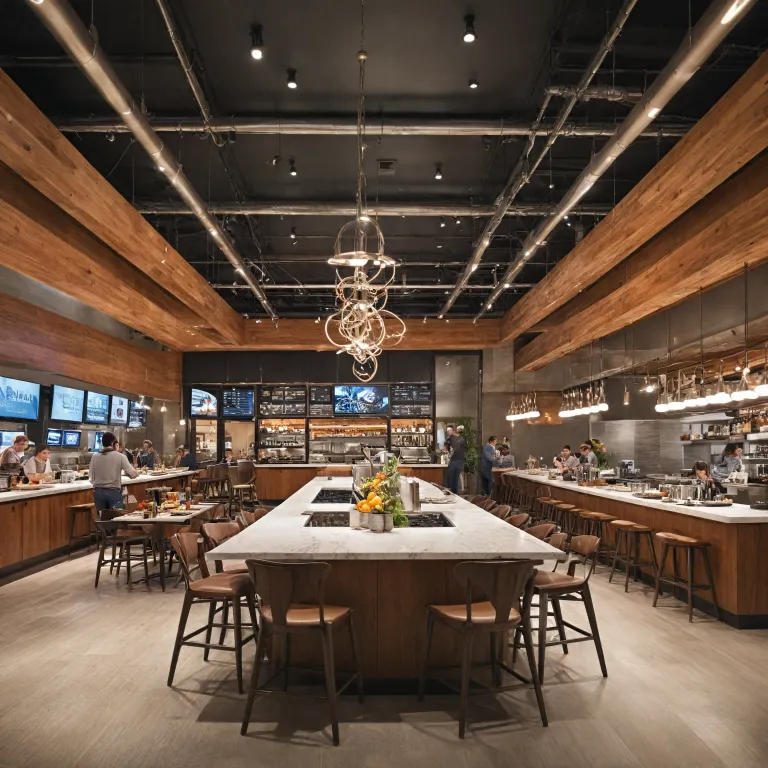
Why f b franchise models now sit at the core of hotel strategy
For hotel groups, the f b franchise model has moved from peripheral add on to a central strategic lever. Asset managers now view each franchise restaurant as a micro business unit, where food margins, people productivity, and brand equity directly influence portfolio value. In this context, the franchise and its restaurants become instruments to arbitrage capital expenditure, operating risk, and long term positioning.
Institutional investors increasingly benchmark f b franchise performance using granular data rather than headline dining revenues. They analyse menu items profitability, table turn velocity, and the range of dayparts served to understand how each restaurant supports RevPAR and total revenue per guest. This deeper understanding of food operations allows them to compare brands, markets, and franchisees with a level of precision that was rare in the industry.
For dirigeants and president CEO profiles, the strategic question is no longer whether to host a restaurant, but which franchise brands and which franchisees can create durable competitive advantage. The perfect example is the way some hotel owners in Las Vegas have repositioned underperforming in house dining into globally recognised franchise brands. In these cases, the f b franchise becomes a lead magnet, a social media asset, and a driver of digital marketing performance for the entire business.
Within this shift, governance topics such as privacy policy, data ownership, and the allocation of digital marketing rights between hotel and franchisee are now board level issues. The f b franchise is no longer a simple place food is served ; it is a strategic platform where brand, people, and technology intersect.
Aligning franchise contracts with asset management and M&A theses
When hospitality groups pursue M&A, the structure of f b franchise contracts can either unlock value or quietly destroy it. Asset managers scrutinise franchise and sub franchise agreements to understand how restaurants, menu items, and food sourcing obligations will constrain future repositioning. They also assess whether franchisees have the operational and financial capacity to sustain brand standards across cycles and markets.
In portfolio transactions, the mix of independent restaurants and branded f b franchise outlets often shapes the investment thesis. Buyers evaluate how quickly they can reflag dining concepts, renegotiate franchisee terms, or introduce new brands that better match the target market. This is particularly relevant in gateway cities such as Atlanta or leisure hubs like Las Vegas, where the range of dining expectations is wide and the industry is highly competitive.
For strategy teams, a key question is how franchise economics align with the group’s capital light ambitions. Royalty structures, marketing fund contributions, and digital marketing rights must be modelled carefully, especially when facebook ads, social media campaigns, and artificial intelligence driven pricing tools are controlled by the franchisor. In cross border deals, privacy policy clauses and data localisation rules can materially affect the value of guest data and campaign performance.
Specialist advisors, including M&A boutiques and the Franchise Brokers Association, increasingly support these negotiations by benchmarking terms against recent deals. Their work complements broader hospitality asset management insights, such as those shared in analyses of strategic shifts in asset management and M&A for hospitality leaders. For dirigeants, the message is clear : f b franchise structures must be engineered as carefully as the headline purchase price.
Data, artificial intelligence and the new economics of f b franchise performance
The most advanced hotel owners now treat each f b franchise as a data rich laboratory for value creation. They integrate point of sale data, booking data, and social media data into a single view of guest behaviour across rooms and restaurants. This unified understanding allows them to optimise menu items, staffing levels, and digital marketing spend with far greater precision.
Artificial intelligence tools are increasingly used to forecast dining demand, segment people by occasion, and refine the range of offers pushed through facebook and other platforms. For example, AI can identify which facebook ads convert best for business travellers versus leisure guests, then automatically adjust spend by market and time of day. In this model, the f b franchise becomes a testing ground for dynamic pricing, personalised offers, and cross selling between rooms and dining.
However, these capabilities raise complex questions around privacy policy, data sharing, and contractual rights between franchisor, franchisee, and hotel owner. Asset managers must ensure that skip main and skip content elements in digital interfaces are not just accessibility features, but also gateways to compliant data capture. They also need clarity on who can use aggregated data to run campaigns, build lookalike audiences, or deploy artificial intelligence models across multiple restaurants and brands.
Groups such as Franchise Group, Inc. and Global Franchise Group illustrate how scale in franchise operations can amplify these data advantages. Their portfolios of restaurants provide a perfect example of how consistent data structures, shared digital marketing platforms, and disciplined brand management can improve both individual franchisee performance and overall corporate valuations. For hotel investors, aligning f b franchise data strategies with broader ownership models, as explored in this analysis of extended stay ownership and strategic models, is becoming a core competency.
Brand architecture, social media and the battle for guest attention
In a crowded hospitality landscape, the f b franchise has become a frontline tool in the battle for guest attention. Strong restaurant brands can extend a hotel’s reach far beyond traditional channels, especially when amplified through social media and targeted facebook ads. For dirigeants, the challenge is to orchestrate multiple brands and restaurants within a single asset without diluting the hotel’s positioning.
Brand architecture decisions now influence everything from signage and menu items to the way people navigate digital touchpoints. Elements such as main content, skip main, and skip content links on websites and apps may seem technical, yet they shape how guests view and interact with each brand. A coherent structure helps guests understand whether they are engaging with the hotel, the f b franchise, or a third party delivery partner, which in turn affects loyalty and data capture.
Social media strategy is equally critical, particularly in experiential markets like Las Vegas where dining and entertainment blur. Franchisees and franchise owners must coordinate content calendars, influencer partnerships, and paid ads to avoid cannibalising each other’s reach. When executed well, the combination of organic posts, facebook ads, and broader digital marketing can turn a single restaurant into a lead generator for rooms, events, and ancillary services.
For asset managers, the key is to ensure that brand and digital rights are clearly defined in franchise agreements. They must protect the hotel’s ability to run its own campaigns while leveraging the scale and expertise of global brands. Case studies of ownership and strategic models in extended stay and mixed use assets, such as those detailed in this deep dive on ownership and strategic models, show how carefully structured f b franchise partnerships can enhance both guest experience and asset value.
Operational governance, franchisees and the people dimension of value creation
Behind every successful f b franchise in a hotel lies a complex web of operational governance. Franchisees must balance brand standards, local market realities, and the expectations of hotel owners who view restaurants as both amenities and profit centres. This requires disciplined people management, clear performance metrics, and a shared understanding of how food and dining contribute to the overall business.
Asset managers increasingly treat franchisees as strategic partners rather than mere tenants, especially in high profile locations such as Atlanta or Las Vegas. They work with franchisees to refine menu items, adjust opening hours, and calibrate the range of services to match guest profiles and market demand. In many cases, joint steering committees review data on guest satisfaction, labour productivity, and digital marketing performance to ensure alignment with the hotel’s positioning.
Training and culture are equally important, because people are the interface between global brands and local guests. Franchisees who invest in service training, social media literacy, and basic understanding of facebook ads often outperform peers in both revenue and guest sentiment. This human centric approach is reinforced by organisations such as the Franchise Brokers Association, which emphasise that “What is Franchise Group, Inc.? A holding company that acquires and manages franchise companies. What does Global Franchise Group do? Specializes in franchising and quick-service restaurant industries. What is the Franchise Brokers Association? An organization supporting franchise brokers and buyers.”
For corporate strategy teams, the implication is clear : f b franchise performance cannot be optimised through contracts and data alone. It depends on the quality of franchisees, the strength of their people, and the depth of their understanding of both brand and market. In M&A scenarios, assessing this human capital becomes as important as reviewing financial statements.
From single assets to platforms : scaling f b franchise strategies across portfolios
As hotel investors consolidate, the f b franchise is evolving from a site specific decision into a portfolio wide platform strategy. Groups such as Franchise Group, Inc., with multi billion revenue and hundreds of restaurants, illustrate how scale can transform franchise economics. Their experience shows that consistent brand management, shared services, and coordinated digital marketing can significantly improve both franchisee and franchisor performance.
For hospitality asset managers, the question is how to replicate this logic across mixed portfolios of hotels, serviced apartments, and resorts. They must decide which franchise brands to prioritise, how to structure master franchise or area development agreements, and when to retain independent restaurants for differentiation. Portfolio level data, including performance by market, concept, and franchisee, becomes essential to guide these choices and to anticipate what is going happen when consumer preferences shift.
Digital infrastructure is the backbone of this platform approach, linking point of sale systems, CRM tools, and social media accounts across multiple assets. Central teams can then orchestrate facebook ads, broader digital marketing campaigns, and artificial intelligence driven analytics to optimise spend and content. Clear privacy policy frameworks and governance over main content, skip main, and skip content elements ensure that data flows remain compliant while still enabling a unified view of guest behaviour.
For dirigeants, the strategic opportunity lies in treating f b franchise networks as scalable engines of value creation rather than isolated amenities. By aligning contracts, people, data, and brand architecture, they can turn restaurants and dining concepts into powerful levers for M&A, asset management, and long term corporate strategy in the hospitality industry.
Key quantitative insights on franchise and restaurant platforms
- Franchise Group, Inc. has reported revenue of approximately 4 937 million USD, underscoring the financial weight of diversified franchise portfolios.
- Global Franchise Group oversees around 1 400 restaurant locations, illustrating the scale advantages available to multi brand franchise platforms.
- Industry consolidation trends indicate growing investor appetite for franchise based business models in food and dining.
- Asset managers increasingly track restaurant level data to link f b franchise performance with overall hotel asset valuations.
Frequently asked questions on f b franchise strategy in hospitality
What is Franchise Group, Inc. and why does it matter to hotel investors ?
Franchise Group, Inc. is a holding company that acquires and manages multiple franchise businesses, including concepts relevant to food and dining. For hotel investors, its scale and diversification provide a benchmark for how franchise platforms can generate stable cash flows and support M&A strategies. Observing its approach helps asset managers understand how to structure their own f b franchise partnerships.
How does Global Franchise Group relate to hotel restaurant strategies ?
Global Franchise Group focuses on franchising within quick service restaurant segments, operating a large network of branded locations. Hotel owners can learn from its brand management, menu engineering, and digital marketing practices when integrating similar concepts into their properties. Its portfolio demonstrates how strong brands and disciplined franchisees can enhance guest dining experiences and asset performance.
What role does the Franchise Brokers Association play in f b franchise deals ?
The Franchise Brokers Association supports franchise brokers and buyers by providing education, tools, and vetted opportunities. In hospitality, this network can help hotel owners and asset managers identify suitable f b franchise concepts and qualified franchisees for specific markets. Their guidance reduces execution risk and improves alignment between brand, location, and operator capabilities.
Why is data so critical for managing f b franchise performance in hotels ?
Data from point of sale systems, guest feedback, and digital marketing campaigns allows owners to understand how restaurants contribute to overall asset value. By analysing this information, asset managers can refine menu items, staffing, and pricing while optimising facebook ads and broader social media strategies. Robust data practices also support more accurate valuations in M&A processes.
How are M&A trends reshaping f b franchise strategies in hospitality ?
Consolidation in both hotel ownership and franchise platforms is pushing stakeholders to standardise contracts, data structures, and brand architectures. This enables investors to scale successful restaurant concepts across portfolios and markets more efficiently. As a result, f b franchise decisions are increasingly integrated into corporate strategy, asset management, and transaction planning.
