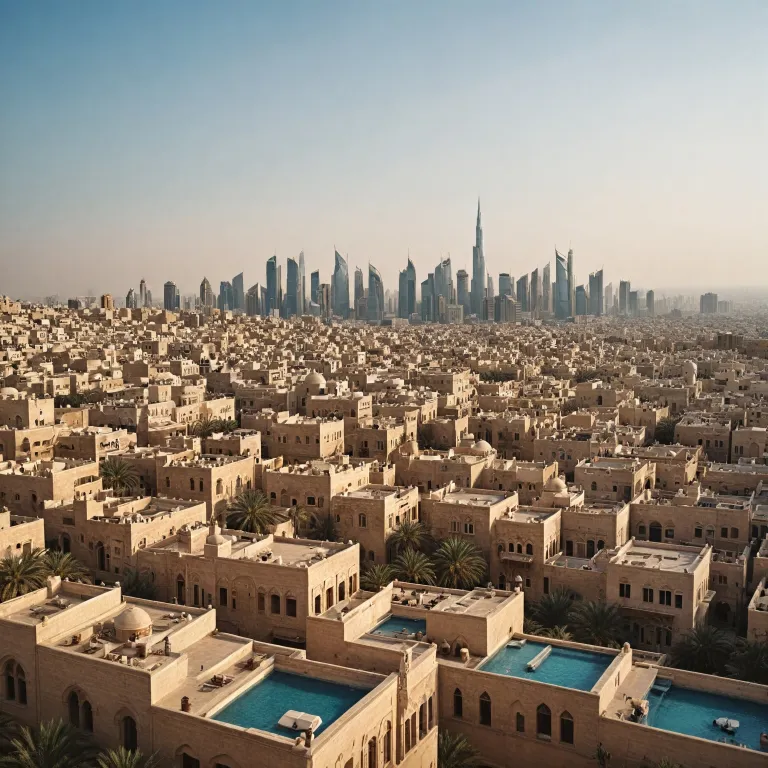
Government vision and policy: Catalysts for hospitality market expansion
Strategic government initiatives have fundamentally reshaped the hospitality investment trends in the Middle East. Saudi Vision 2030 and the UAE’s 'We the UAE 2031' campaign are driving a new era of growth, focusing on economic diversification and positioning the region as a global tourism and business hub. These policies have led to a surge in hospitality market size, with Saudi Arabia, the UAE, and Egypt leading in hotel construction projects and real estate development.
Saudi Arabia’s government has prioritized religious tourism, leveraging the country’s unique position as the heart of the Islamic world. The expansion of the Red Sea project and the development of luxury mid and midscale hotels are designed to meet both short term and long term demand from international and regional travelers. The UAE government, meanwhile, has fostered growth in the hospitality sector by investing in infrastructure and promoting Abu Dhabi and Dubai as premier travel tourism destinations.
These government-led strategies have resulted in an 8% year-on-year increase in hotel construction projects, with the hospitality sector’s market segmented to attract both business and leisure travelers. The focus on religious and event tourism, coupled with robust support for international hotel operators, has created a dynamic environment for asset managers, M&A advisors, and investment funds. The region’s hospitality market is now recognized for its resilience and adaptability, with government support ensuring continued growth and innovation.
Hotel construction pipeline: Market segmentation and asset management strategies
The Middle East’s hotel construction pipeline has reached unprecedented levels, with 659 projects and 163,816 rooms as of the latest data. Saudi Arabia leads with 349 projects, followed by Egypt and the UAE, reflecting a market segmented by geography, brand, and guest profile. Asset managers are increasingly focused on optimizing returns through a blend of luxury, mid, and midscale hotels, as well as hotels resorts and branded residences.
Asset management strategies now emphasize flexibility and operational efficiency, responding to the evolving needs of the hospitality market. The rise of midscale brands from operators like Accor, Marriott International, and Wyndham addresses the growing demand for accessible yet high-quality accommodation. These brands are being introduced to achieve quicker returns and to diversify the market offering, especially in cities like Riyadh, Dubai, and Abu Dhabi.
Real estate consultancies such as Knight Frank and Jones Lang Lasalle highlight the shift from development-led expansion to investment-oriented growth. The integration of innovative booking channels and digital platforms has further enhanced the guest experience, supporting both short term and long term growth.
Tourism demand drivers: Religious, business, and leisure segments
Tourism demand in the Middle East is shaped by a unique blend of religious, business, and leisure travel. Religious tourism remains a cornerstone of the Saudi hospitality market, with millions visiting annually for pilgrimage. The government’s investment in infrastructure and hotels near holy sites has boosted both the market size and the quality of guest experiences.
Business travel is another significant driver, particularly in the UAE and Saudi Arabia, where international conferences and major events attract global participants. The hospitality sector has responded by developing hotels and hotels resorts tailored to business travelers, offering state-of-the-art meeting facilities and seamless booking channels. Leisure tourism is also on the rise, with destinations like the Red Sea and Ras Al Khaimah gaining prominence for their unique offerings.
The market segmented approach ensures that the hospitality industry caters to diverse traveler profiles, from luxury seekers to mid-market guests. The integration of immersive storytelling and innovative food and beverage services further differentiates the region’s hotels.
M&A activity and investment flows: Shaping the future of hospitality
M&A activity in the Middle East’s hospitality sector is accelerating, driven by robust demand, government support, and the region’s growing global profile. Investment firms such as Investcorp are acquiring hotel assets in key MENA cities, capitalizing on tourism-driven appreciation and the expanding hospitality market. The influx of international capital is reshaping ownership structures and encouraging the development of mixed-use real estate projects.
Hotel operators like Marriott International and Accor are expanding their portfolios through both organic growth and strategic acquisitions. The introduction of midscale brands and branded residences is a direct response to shifting market dynamics and the need for diversified revenue streams. M&A advisors and asset managers are increasingly focused on aligning investment strategies with long term market trends, ensuring sustainable growth and value creation.
Government initiatives continue to play a pivotal role, with incentives for foreign investment and streamlined regulatory frameworks. The hospitality sector’s resilience, as evidenced by rising occupancy rates and RevPAR, underscores the attractiveness of the region for both local and international investors.
Performance metrics and market outlook: Growth, RevPAR, and occupancy
The Middle East hospitality market is experiencing robust growth, with key performance indicators reflecting strong demand and operational excellence. Aggregated RevPAR across the GCC has increased by 5.4%, while occupancy rates have reached nearly 70%. Riyadh, Dubai, and Kuwait City lead in average daily rates, highlighting the region’s ability to attract high-spending travelers and business guests.
Market segmented data from STR and Lodging Econometrics reveal that both luxury and mid-market hotels are performing well, supported by a diversified demand base. The rise of branded residences and hotels resorts has contributed to the overall market size, offering new opportunities for asset managers and investors. The integration of advanced booking channels and digital solutions has further enhanced revenue management and guest satisfaction.
Looking ahead, the hospitality sector is expected to maintain its upward trajectory, driven by continued government investment, international travel growth, and the expansion of religious and event tourism. The focus on sustainability and innovation will be critical in ensuring long term competitiveness and market leadership. The region’s hospitality industry is well positioned to capitalize on emerging trends and to deliver sustained value for stakeholders.
Innovation and differentiation: Storytelling, branded residences, and F&B excellence
Innovation is at the heart of hospitality investment trends in the Middle East, with operators embracing new concepts to differentiate their offerings. Immersive storytelling is being used to enhance guest experiences, as seen in properties like Atlantis The Palm Dubai and the Boutique Group’s royal palace stays in Saudi Arabia. These initiatives create memorable journeys that resonate with both international and regional guests.
The rise of branded residences, such as St Regis Residences in Muscat, reflects the region’s commitment to luxury and diversification within the hospitality sector. These developments blend the comfort of home with the amenities of high-end hotels, appealing to long term residents and investors. Food and beverage innovation is also a key focus, with groups like Accor’s Paris Society elevating culinary standards and attracting discerning travelers.
Event tourism and the hosting of global conferences further enhance the region’s profile, driving demand for hotels and supporting the growth of the hospitality market. The integration of technology, from advanced booking channels to personalized guest services, ensures that the sector remains agile and responsive to changing preferences. The Middle East continues to set new benchmarks for excellence and creativity in hospitality.
Expert perspectives and strategic recommendations for stakeholders
Industry experts agree that the Middle East’s hospitality sector is entering a transformative phase, marked by strategic investments and innovative asset management. As one expert notes, "The growth is driven by strategic government initiatives, increased tourism, and significant investments in infrastructure and hospitality projects." Another highlights, "Saudi Arabia, Egypt, and the United Arab Emirates are leading in hotel construction projects in the region." These insights underscore the importance of aligning corporate strategy with evolving market dynamics.
Stakeholders are encouraged to monitor emerging trends such as the shift towards midscale hospitality, the expansion of branded residences, and the integration of immersive guest experiences. Asset managers and M&A advisors should leverage data analytics and market research to inform decision making and to identify new opportunities for value creation. Collaboration with government bodies, hotel operators, and real estate partners will be essential in navigating the complexities of the hospitality market.
By focusing on long term growth, operational excellence, and guest-centric innovation, the region’s hospitality industry can continue to attract international investment and to enhance its global standing. The future of hospitality investment trends in the Middle East is bright, offering significant potential for all market participants.
Key statistics: Hospitality investment trends in the Middle East
- Total hotel construction projects in the Middle East: 659 projects (Q3 2025)
- Total rooms in the Middle East hotel construction pipeline: 163,816 rooms (Q3 2025)
- Year-over-year increase in hotel construction projects: 8% (Q3 2025)
- Aggregated RevPAR increase across the GCC: 5.4%
- Occupancy rates across the GCC: 69.5%
- Average daily rate in Riyadh: 290 USD
- Average daily rate in Dubai: 221 USD
- Average daily rate in Kuwait City: 192 USD
Frequently asked questions about hospitality investment trends in the Middle East
What is driving the growth in the Middle East's hospitality sector?
The growth is driven by strategic government initiatives, increased tourism, and significant investments in infrastructure and hospitality projects.
Which countries are leading in hotel construction projects in the Middle East?
Saudi Arabia, Egypt, and the United Arab Emirates are leading in hotel construction projects in the region.
What are some emerging trends in the Middle East's hospitality industry?
Emerging trends include immersive storytelling, event tourism, midscale hospitality, branded residences, and innovative food and beverage services.
Trusted sources for hospitality investment trends in the Middle East
- https://www.knightfrank.com/
- https://www.str.com/
- https://www.jll-mena.com/
